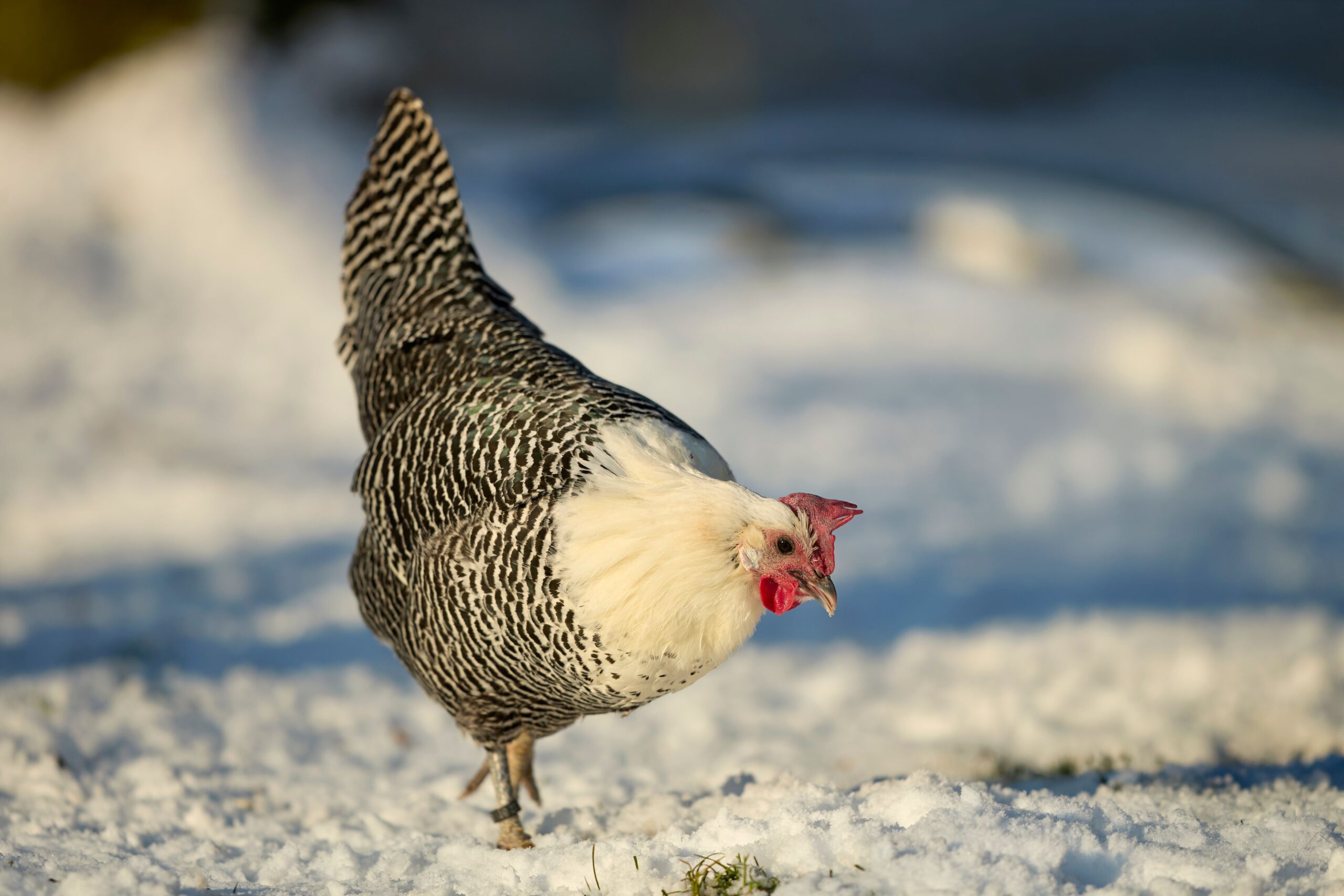

As winter approaches and temperatures drop, it's important to make sure your backyard chickens have access to fresh, unfrozen water. Especially if you live in a northern region like we do!
Wisconsin winters are no joke. Between high winds, heavy snow, and temperatures that can drop and stay well below zero, keeping chicken water from freezing can be a real challenge. And if you don't have electricity running to your chicken coop or run, it can feel nearly impossible.
Over the years, I've come across all kinds of suggestions for keeping chicken water from freezing without electricity. Some are pretty clever, while others sound a little too good to be true. So, naturally, I decided to test a few of them myself!
Today, I'm sharing several ways to help keep chicken water from freezing, along with the results of my own experiments in temperatures ranging from 21°F all the way down to -11°F.
But first, there's something important to understand.
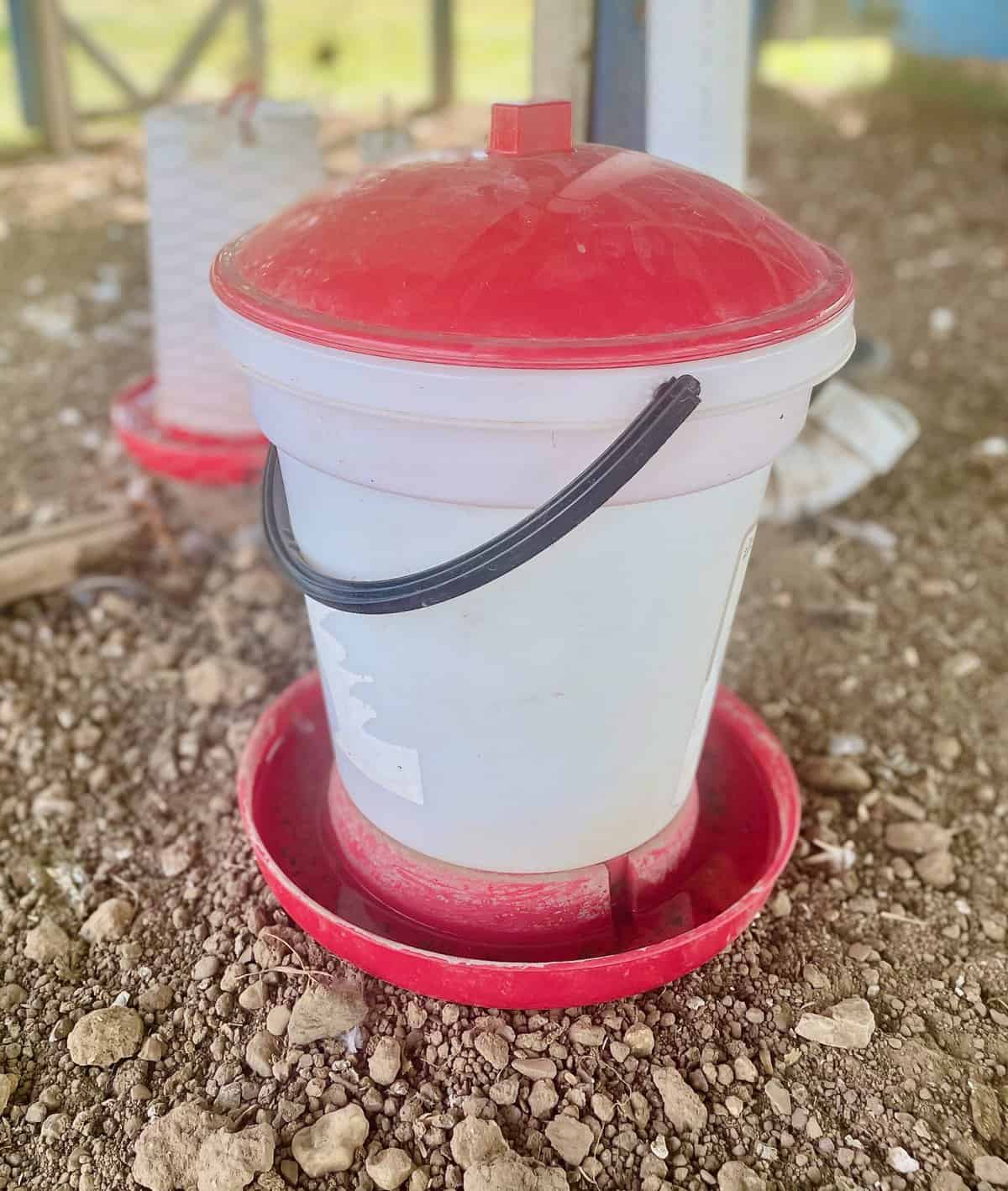
Can You Really Keep Chicken Water From Freezing Without Electricity?
Here's the thing. Most methods that claim to prevent chicken water from freezing without electricity don't actually prevent it from freezing. They just slow down the process. Water freezes at approximately 32°F (0°C), and when the surrounding temperature drops below that, the water begins losing heat until ice forms.
Some methods can help retain heat longer, while others may interfere with ice formation. But without a continuous heat source, the water will eventually freeze if conditions stay cold enough. That doesn't mean these methods aren't worth trying, though!
Even slowing down the freezing process can be helpful, especially if it means your chickens have access to liquid water for a longer period between checks.
How I Tested These Methods
I didn't want to just try these popular tricks and assume they worked. I wanted to see whether they actually made a difference. So, for each experiment, I set up two buckets. One contained the method I was testing, and the other was my control bucket, filled with plain, room-temperature water.
This gave me something to compare the results against. Now, these weren't fancy laboratory experiments. Just a chicken keeper in Wisconsin putting popular advice to the test during some pretty cold weather!
Let's see what happened.
Keep Chicken Water From Freezing Without Electricity
Ping-Pong Balls
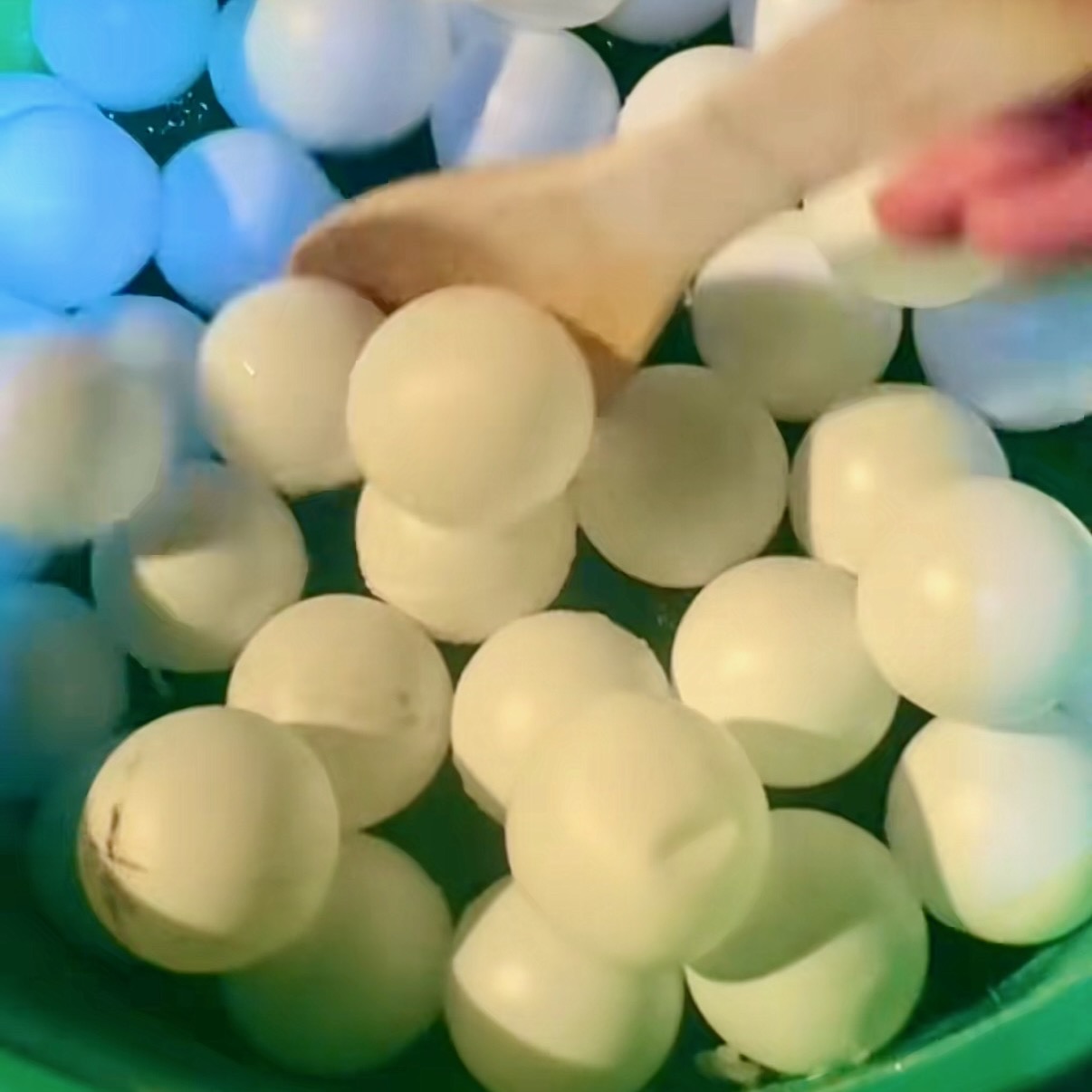
Ping-pong balls? Really? How in the world someone came up with this method is beyond me, but I was curious enough to try it! The idea is pretty simple. Toss a few ping-pong balls into your chicken's water bucket and let them float on the surface.
When I tested this method, the outside temperature was just 12°F (-11°C).
The next morning, I found ice forming around the edges of the bucket, but the rest of the water surface was still liquid. Not bad for a few ping-pong balls!
So, what's the science behind it?
The theory is that as the balls move around on the surface, they can interfere with the formation of a continuous layer of ice. However, ping-pong balls don't generate heat or provide much insulation. And if there's no movement, there's little reason to expect them to stop ice from forming.
While my experiment showed promising results, their effectiveness likely depends on factors like wind, water volume, and how long the temperatures remain below freezing.
Still, I thought this was a pretty interesting result!
Insulate the Water Container
Insulating your chicken's water container is another way to help slow down freezing. Insulation works by reducing how quickly heat transfers from the water to the colder surrounding air.
You can wrap your water container with insulating materials, such as foam or reflective insulation. Just make sure your chickens can't peck at or eat the material, and that they can still easily access the water.
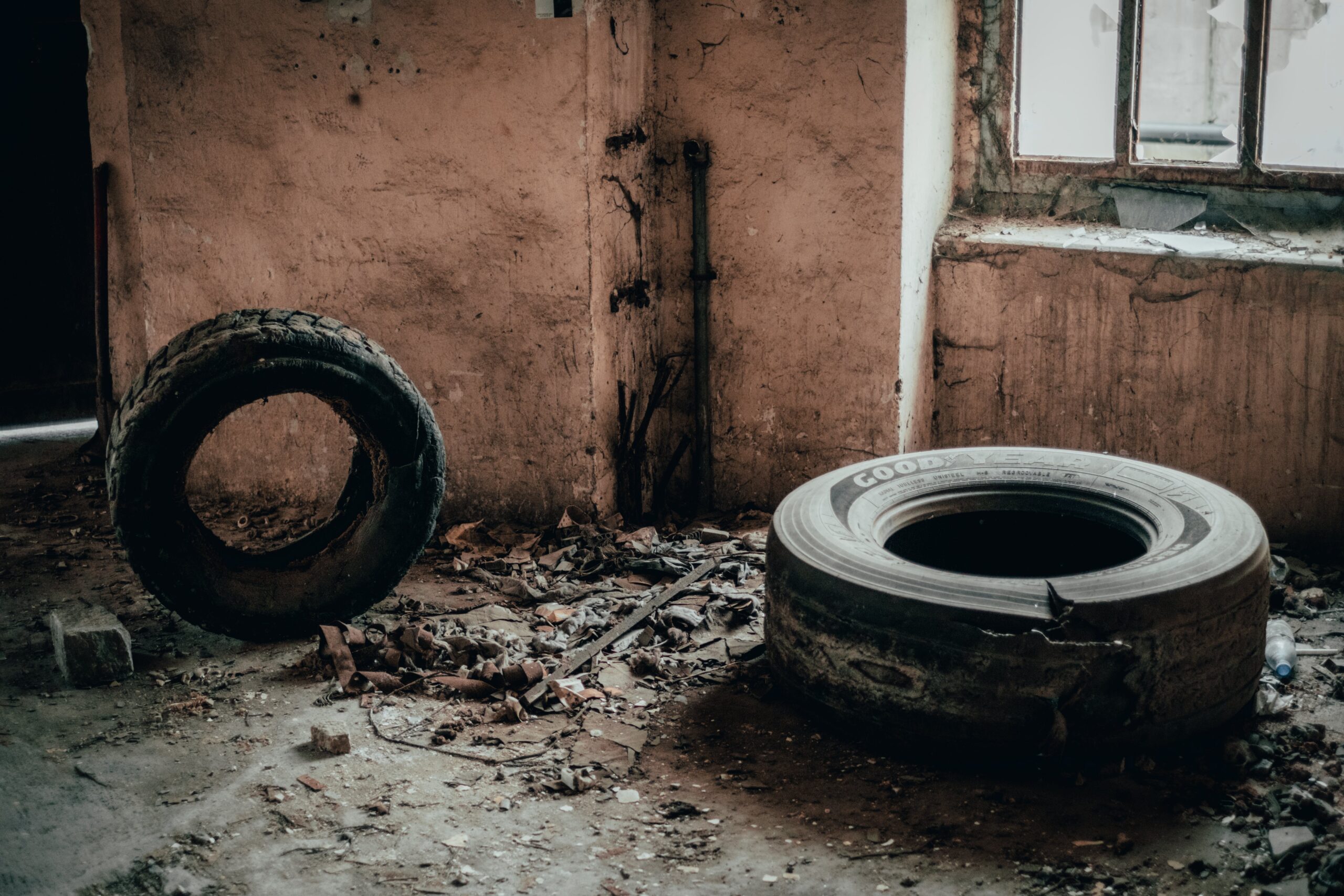
Here's another idea: use an old tire!
Black rubber absorbs sunlight, which can help warm the tire during sunny winter days. To try this method, remove the wheel and fill the empty space inside the tire with insulating material like straw. Then place a bucket of water in the center. The insulation may help slow heat loss, while the tire provides some protection from the surrounding cold.
The only drawback is that as the water level drops, it can become difficult for chickens to reach the water. You'll need to make sure the water stays at a level where they can comfortably drink. And remember, insulation doesn't create heat. It only slows down how quickly the water loses it.
Start With Warm Water
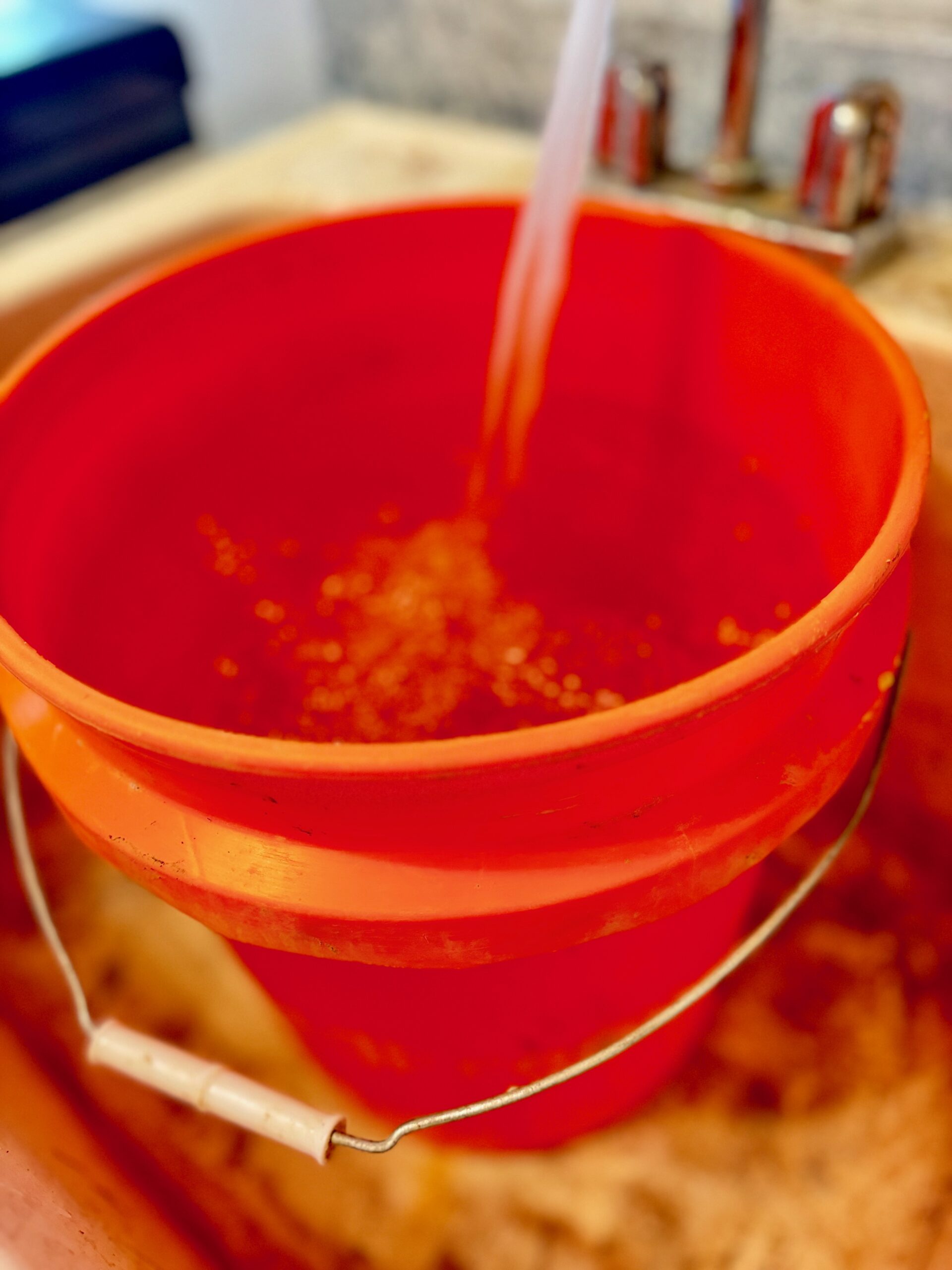
This is probably one of the easiest methods you can try! Instead of filling your chicken waterer with cold or room-temperature water, start with warm water. I wanted to see just how much of a difference this could make, so I put it to the test.
At 21°F (-6°C), I placed two buckets outside. One contained warm water, and the other contained plain, room-temperature water.
The results? The room-temperature water froze solid, while the warm water had only developed a thin layer of ice across the top!
Let's look at why this happens.
Warm water contains more thermal energy than cooler water. That means it generally takes longer to lose enough heat to reach freezing temperatures. Of course, this doesn't mean warm water can't freeze. It absolutely will if temperatures remain cold enough.
But starting with warm water may buy you some extra time. Just be sure to use comfortably warm water, not hot water that could burn your chickens.
Add a Saltwater Float
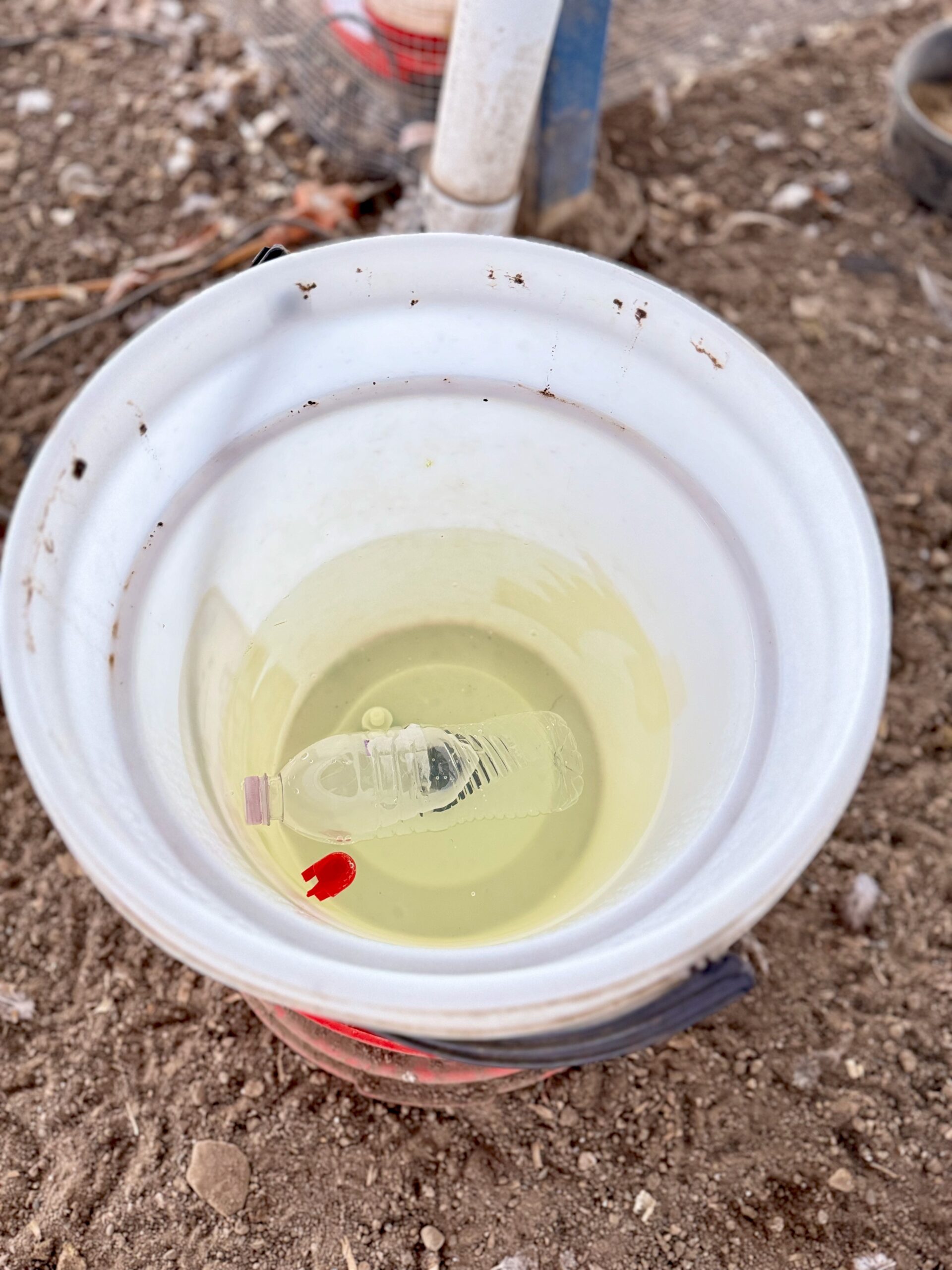
A saltwater float is another method I've heard chicken keepers talk about quite a bit. The idea is to partially fill a plastic bottle with saltwater, seal it tightly, and place it inside a larger bucket of fresh drinking water.
Because saltwater has a lower freezing point than fresh water, the saltwater inside the bottle can remain liquid at temperatures where fresh water would freeze. But does that help keep the surrounding water from freezing?
I decided to find out!
At 21°F (-6°C), I tested a bucket containing a floating saltwater bottle against my control bucket. Interestingly, the saltwater inside the bottle didn't freeze at all. And the fresh water immediately surrounding the bottle remained liquid.
However, a significant amount of ice still formed throughout the rest of the bucket.
So, why did this happen?
Salt lowers the freezing point of water, which explains why the water inside the bottle remained liquid. But the saltwater bottle doesn't continuously produce heat, so it can't reliably prevent the fresh water around it from freezing.
The bottle may influence how ice forms locally, but my experiment didn't establish exactly why that area remained liquid. While it was interesting to see, I wouldn't count on this method to keep an entire waterer ice-free.
Important: Never add salt directly to your chickens' drinking water to prevent freezing. Excessive salt can cause serious health problems, including salt toxicity. If you try a saltwater float, make sure the bottle is securely sealed and can't leak.
What About Beet Juice?
Now here's an interesting one!
Did you know that beet-based products are sometimes used to help deice roads? That got me wondering whether beet juice could also help keep chicken water from freezing. The idea behind this method is that the naturally occurring sugars in beet juice can lower the freezing point of water.
But how much beet juice should you use?
I searched and searched but couldn't find a reliable guide for the proper ratio. However, I came across several people recommending 1 tablespoon of beet juice per gallon of water, so that's what I decided to test.
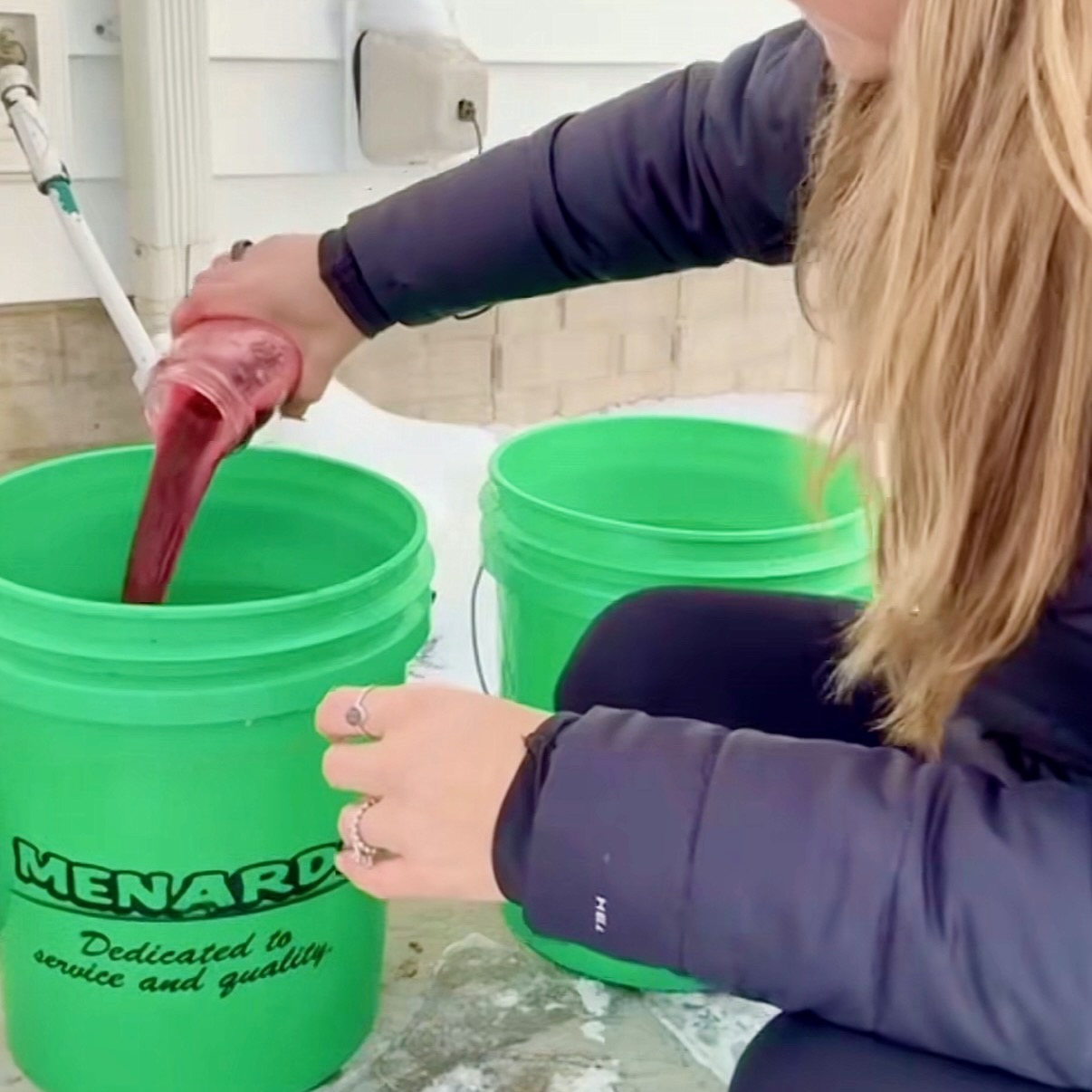
There was just one problem. I didn't have any beet juice! But I did have beetroot powder, so I decided to make my own. I added the beetroot powder to a glass of water, gave it a good shake, then poured the mixture into my water bucket and stirred everything together.
At 19°F (-7°C), I tested my homemade beetroot mixture against a control bucket containing plain, room-temperature water.
The Results
The beet juice mixture developed only a very thin layer of ice across the top, which broke apart easily!
So, What's the Science Behind It?
When sugar dissolves in water, it lowers the water's freezing point. This is called freezing-point depression. Essentially, dissolved sugar makes it a little harder for water molecules to form ice crystals.
However, the amount of sugar matters. At just 1 tablespoon of beet juice per gallon of water, the freezing-point reduction would likely be extremely small, nowhere near enough to keep water liquid at 19°F on its own.
So while my results were interesting, I can't say for certain that the sugar was responsible for the difference I observed. And here's an important distinction: Ordinary food-grade beet juice isn't the same as commercial beet-based road deicer, which may contain salts and other additives unsuitable for chickens.
My Takeaway
I was surprised by how little ice formed during this experiment, especially at 19°F!
But while the results were promising, I wouldn't recommend adding beet juice to chicken drinking water specifically to prevent freezing until we have better evidence about both its effectiveness and the safety of regular use. But it's definitely an experiment I'd like to revisit!

Use Sunlight to Your Advantage
Another simple way to help slow down freezing is to position your chicken's water container where it receives direct sunlight. Even during winter, sunlight can warm the container and the water inside.
Dark-colored containers generally absorb more solar energy than light-colored ones, which may provide a little extra warmth on sunny days. Of course, this won't help much on cloudy days or overnight, but every little bit can help!
Just make sure your chickens can easily access their water and that the location is protected from contamination.
Protect the Water From Wind
If you've ever stood outside on a windy Wisconsin winter day, you know how quickly the cold can become uncomfortable! While wind chill doesn't make an object colder than the actual air temperature, moving air can increase how quickly a warmer object loses heat.
That includes your chicken's water. Placing your waterer behind a windbreak or in a sheltered area may help slow the cooling process.
Just be careful not to sacrifice proper ventilation inside your coop. Good ventilation is especially important during winter to help manage moisture.
Frequent Water Replacement
Sometimes the simplest solution is the most effective. If you don't have electricity available, regularly replacing frozen water with fresh, liquid water may be your most dependable option.
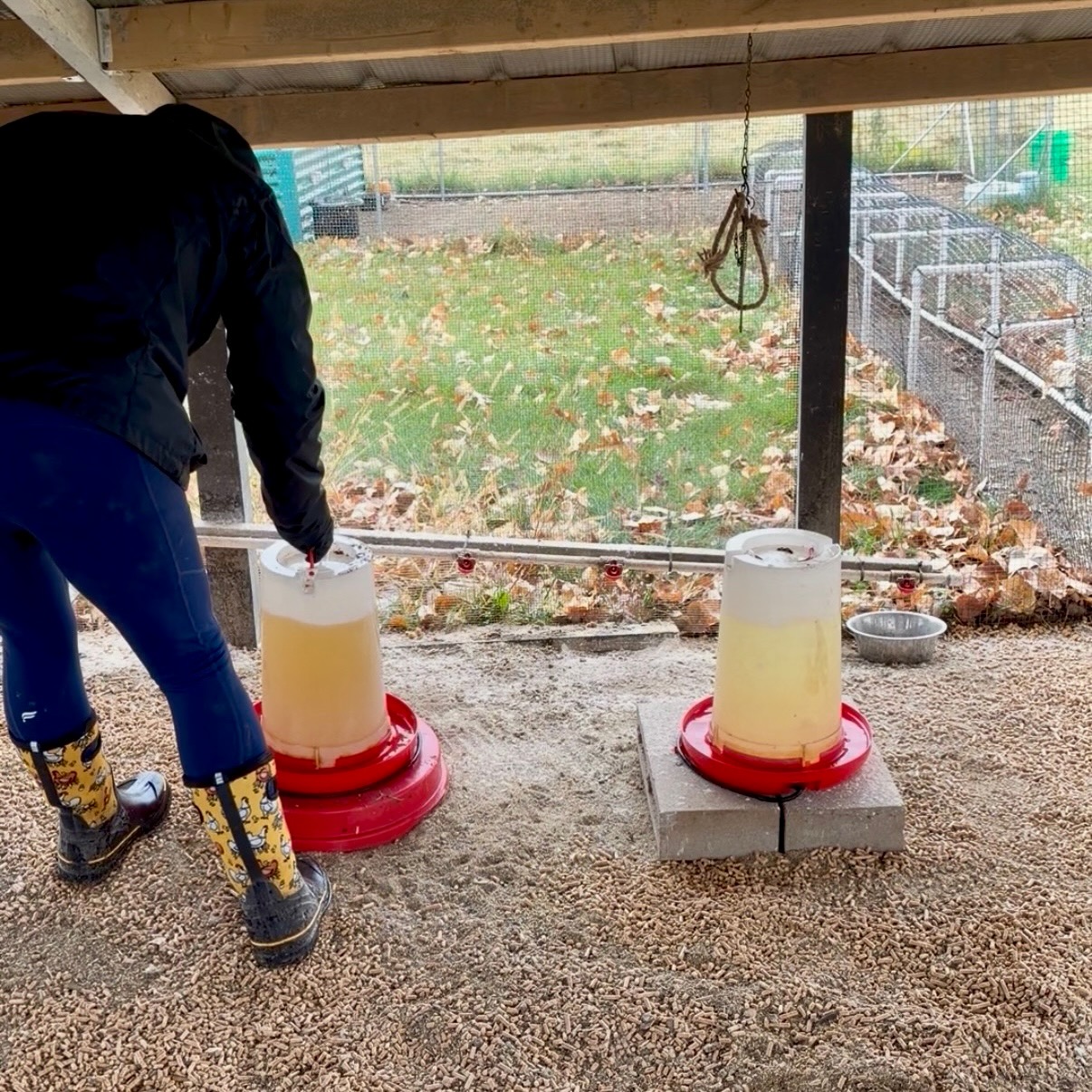
You can make this easier by keeping two waterers on hand. When one starts freezing, bring it inside to thaw and replace it with the second.
During extremely cold weather, you may need to check and replace water several times throughout the day. I know it's not the most exciting solution, but making sure your chickens actually have access to drinking water is what matters most!
What Happens When Temperatures Drop Below Zero?
After testing several of these methods individually, I decided to take things a step further. What if I combined a few of them? Surely, warm water, beet juice, AND ping-pong balls would stand a better chance against the cold, right? Well, Wisconsin had other plans. 😂
I tested this combination when the outside temperature was -11°F (-24°C). And the result? The water froze solid. Honestly, I wasn't surprised. At temperatures that low, the water loses heat rapidly, and none of these methods provides a continuous source of warmth. That doesn't mean they can't help in milder freezing conditions. My earlier experiments showed some encouraging results.
But there's a big difference between slowing down freezing at 20°F and trying to keep water liquid when it's well below zero. And that's why, when temperatures get that extreme, I prefer a heated waterer.
Keeping Chicken Water From Freezing With Electricity
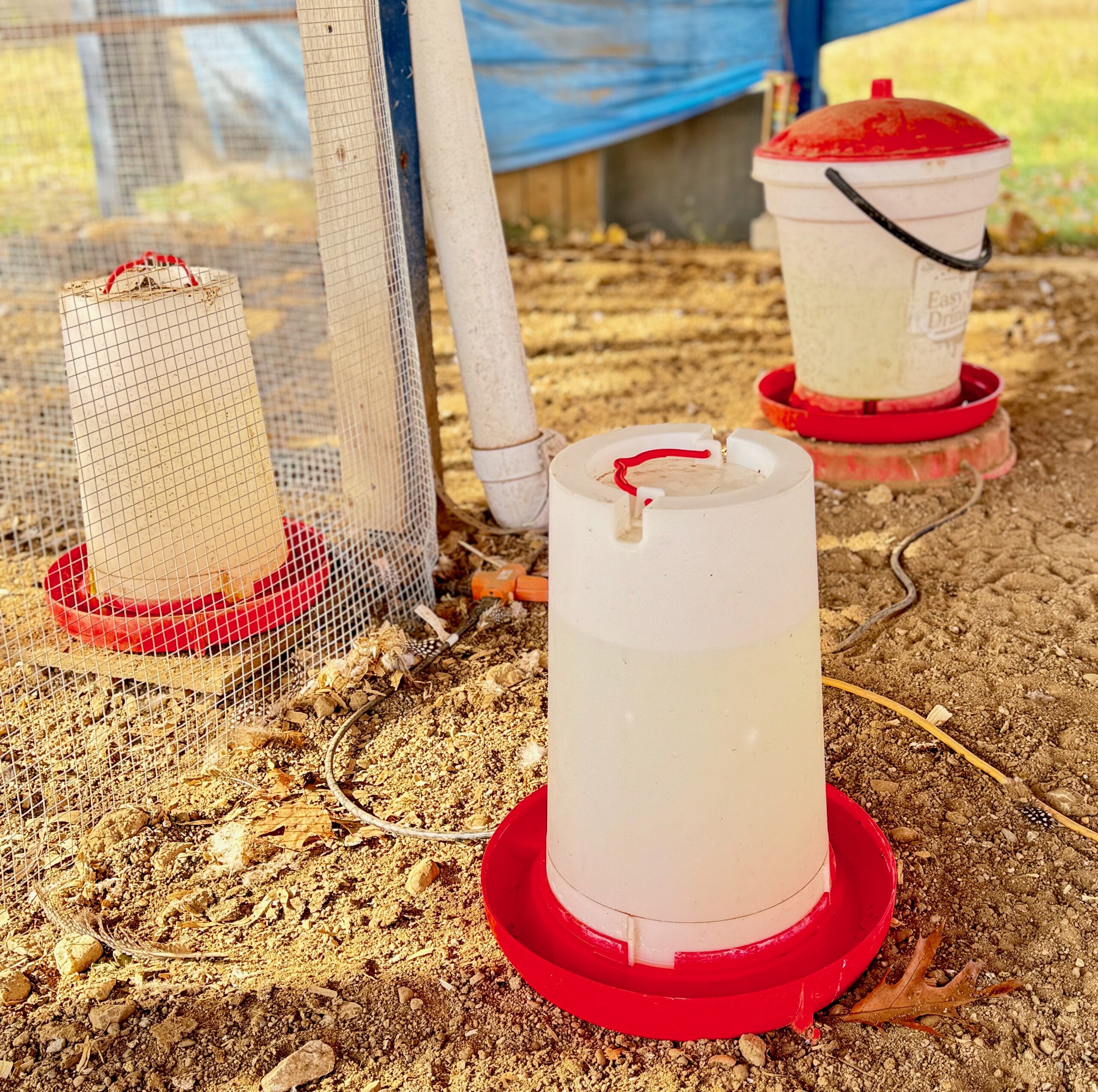
I know this article is about keeping chicken water from freezing without electricity, but I also want to share what's worked for us during our Wisconsin winters. We don't have electricity permanently installed in our chicken coop, but we use an outdoor-rated extension cord to supply our heated waterers during winter.
If you're considering a similar setup, make sure it's appropriate for outdoor use and installed according to electrical safety requirements. Long extension cords can create hazards if they're overloaded, damaged, or exposed to moisture.
Heated Waterers
One of the most convenient ways to prevent chicken water from freezing is by using a heated waterer. These come in several styles, including heated buckets, bowls, and poultry water fountains.
We bought our first heated waterer after our first winter with chickens, and I loved it so much that I eventually bought another one! There's something wonderful about not having to constantly worry whether your chickens' water has turned into an ice block. Of course, even heated waterers need to be checked regularly to make sure they're functioning properly.
Heated Bases
During our first winter with chickens, we used a heated base underneath our regular waterer. I loved the idea because it meant we could use the same waterer year-round. Unfortunately, it was no match for our Wisconsin winters.
We can experience stretches where temperatures reach -25°F (-32°C), and during those frigid days, our water would freeze solid. The heated base simply couldn't keep up or melt the ice quickly enough for our chickens to drink.
Because of that experience, I would only consider a heated base for conditions within its rated operating range, and I'd still monitor it closely.
Submersible Water Heaters
Another option is a submersible deicer specifically designed for livestock or poultry drinking water. These can be particularly useful for larger water containers, including some nipple-waterer systems. Just make sure the heater is approved for your particular container material and intended use.
I wouldn't recommend using an ordinary aquarium heater unless it's specifically rated for that application. Equipment that isn't designed for outdoor livestock watering can create electrical or overheating hazards.
What Shouldn't You Use?
Heat Lamps
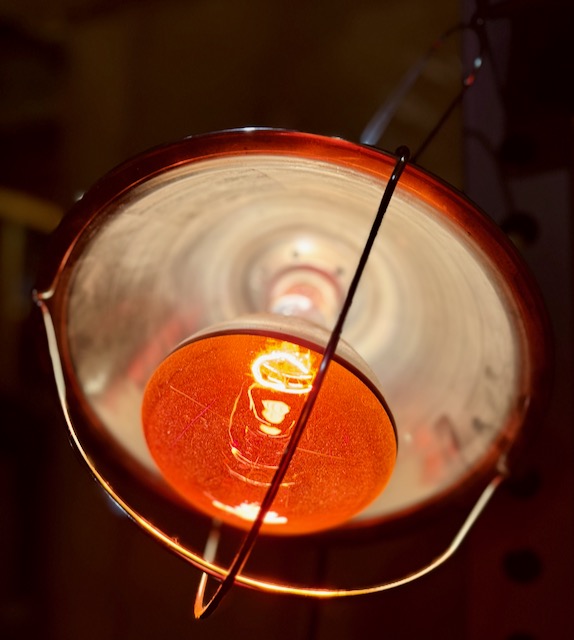
I would never recommend using a heat lamp to keep chicken drinking water from freezing. Heat lamps can create a serious fire hazard, especially in chicken coops where combustible materials like bedding, feathers, and dust are common.
They aren't a safe substitute for a properly designed heated waterer. If you need an electric solution, choose equipment specifically manufactured for poultry or livestock watering.
What Did My Experiments Teach Me?
One of the biggest things I learned is that there isn't necessarily one simple answer to keeping chicken water from freezing without electricity. Some of the methods I tested showed promising results in moderately freezing temperatures.
Here's a quick look at what happened:
| Method | Outside Temperature | Results |
| Warm water | 21°F | Thin surface ice; control froze solid |
| Saltwater float | 21°F | Liquid water around bottle, but substantial ice elsewhere |
| Ping-pong balls | 12°F | Ice around edges, with most of the surface remaining liquid |
| Beet juice | 19°F | Thin layer of ice that broke easily |
| Combined methods | -11°F | Water froze solid |
Each experiment included a control bucket of plain, room-temperature water. Keep in mind that these tests were performed under different weather conditions, and the observations don't establish that one method is universally better than another.
But they do give us something interesting to explore! I'd love to continue testing these methods, especially to see how they perform at different temperatures and over longer periods.
The Bottom Line
Keeping your chickens hydrated during winter is just as important as it is during summer. While there are several ways to help slow down water freezing without electricity, none of them is guaranteed to keep water liquid during prolonged freezing temperatures.
My experiments showed that some popular tricks may be helpful under certain conditions, but they also showed just how quickly those methods can become ineffective when temperatures plunge below zero.
If you don't have electricity available, my biggest recommendation is to combine practical methods with frequent water checks and replacements. And remember, just because something is repeated over and over in chicken-keeping groups doesn't necessarily mean it's been proven to work.
That's why I love putting these ideas to the test!
At HenFolk™, we're all about Rethinking Chicken Keeping, and sometimes that starts with questioning what we've always been told.