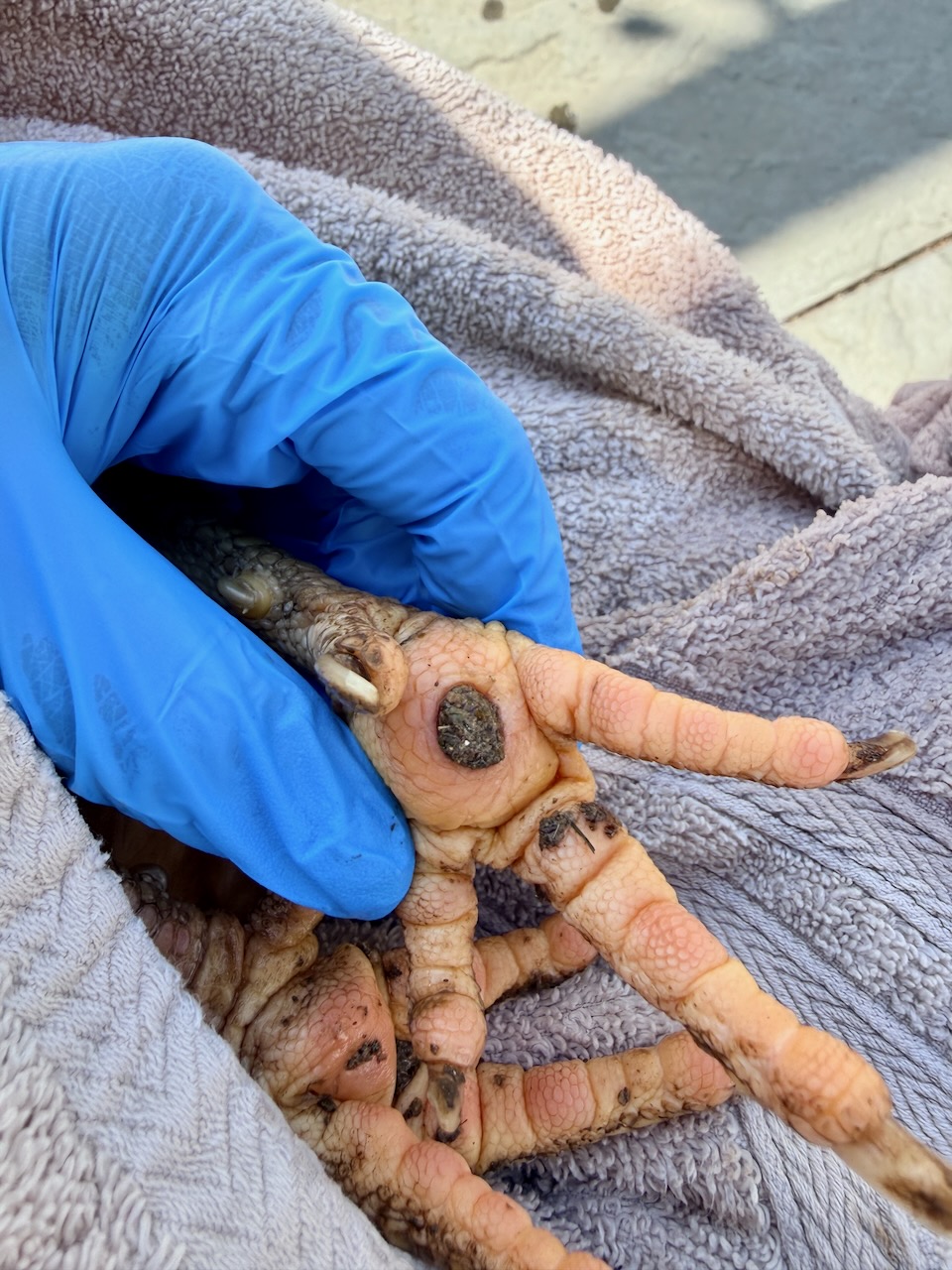

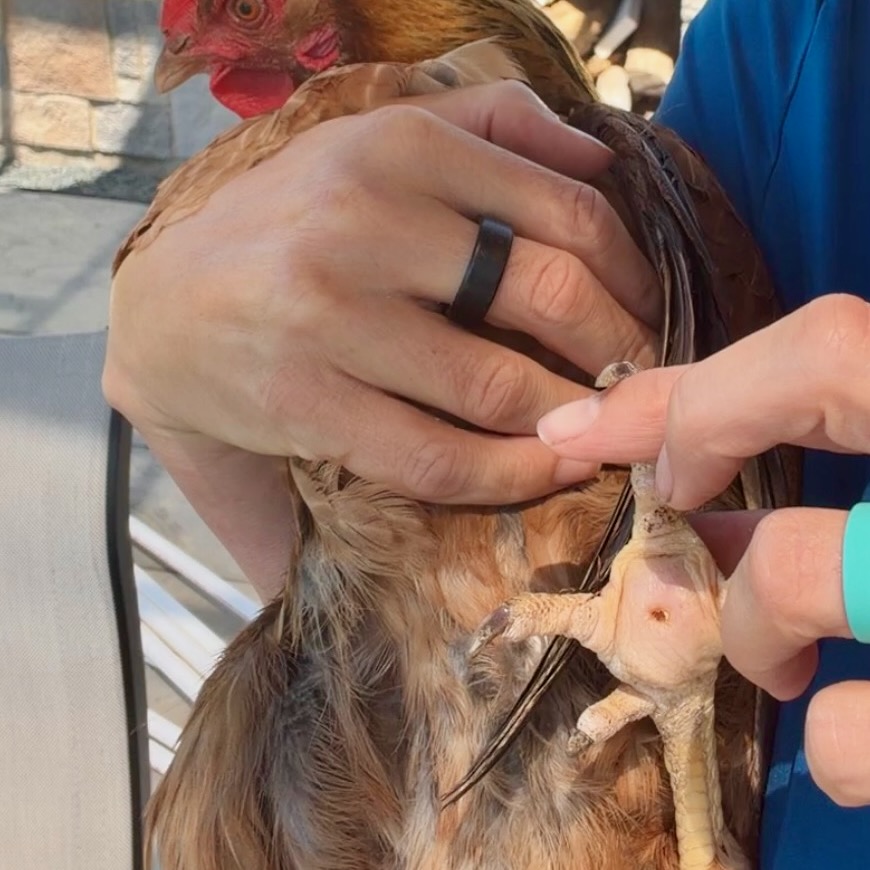
I used to think bumblefoot was pretty straightforward. A chicken steps on something sharp, gets a cut or scrape on her foot, bacteria get inside, and eventually you find that telltale black scab. And when you do, all the advice online tells you to soak the foot, remove the scab, get the hard “kernel” out, wrap it up, and you're good to go. At least, that's what I had always learned.
Then I found bumblefoot in several of my own hens. I treated some of them the way I had been taught, including removing the scab and material underneath. But instead of feeling like I was helping, I started wondering if I was actually making things worse. That was the moment I started questioning everything I thought I knew about bumblefoot.
And if you've been around HenFolk for any amount of time, you probably know what happened next. I went looking for the research, and what I found completely changed the way I think about bumblefoot. Because yes, a cut or puncture can lead to bumblefoot, but that's only one piece of a much bigger puzzle.
Pressure matters. Moisture matters. Roosts can matter. Bedding can matter. How a chicken distributes her weight can matter. Age, nutrition, genetics, previous injuries, and even the way an individual chicken moves may play a role. And perhaps most importantly, not every case of bumblefoot begins with a cut.
That's why I've changed the way I approach it with my own flock. I don't just want to treat the foot anymore. I want to know why it happened.
First, what exactly is bumblefoot?
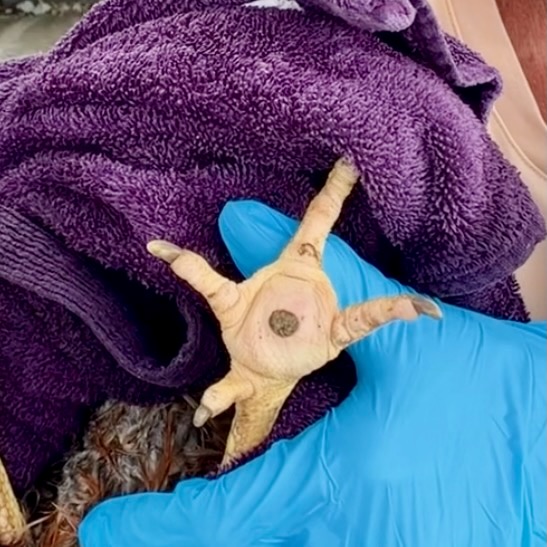
Bumblefoot is a term we use for inflammation and sometimes infection of the weight-bearing surface on the bottom of a chicken's foot. In research and veterinary literature, you'll also see terms like pododermatitis and footpad dermatitis. They aren't always describing the same thing, which is important.
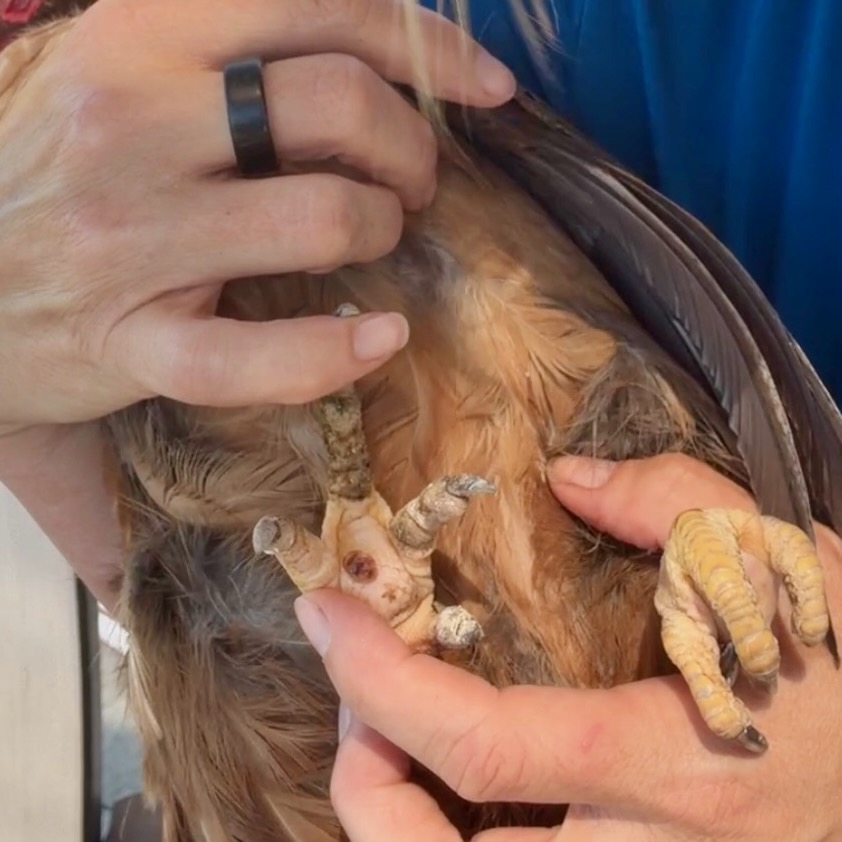
A slightly red or irritated footpad is not the same thing as a swollen foot with a deep bacterial abscess. Bumblefoot can start small. You might notice redness, shiny skin, thickening, or a tiny lesion. And as it progresses, you may see a dark scab, swelling, heat, pain, limping, or even swelling between the toes. In severe cases, infection can travel into deeper tissues.
And here's something I really wish I had understood sooner: A black scab does not automatically mean there's a “kernel” underneath that needs to be removed.
It tells us there's a lesion. It doesn't tell us how deep it is, whether there's an abscess underneath it, or what originally caused the damage. And that brings us to the really interesting part.
Bumblefoot doesn't always start with a cut
I think this is probably the biggest misconception I had about bumblefoot. I thought bacteria needed an obvious doorway into the foot. A splinter. A puncture. A scrape. That absolutely can happen, but research suggests there's another pathway we need to talk about much more in backyard chicken keeping: repeated pressure and irritation can also damage the footpad.
Think about what a chicken's feet actually do all day. She's walking, scratching, jumping, and landing on them. Then she gets on a roost and puts pressure on those same feet for hours while she sleeps. If the tissue becomes irritated or damaged from pressure, moisture, abrasion, or another stressor, the skin barrier can eventually break down. Then bacteria have an opportunity to invade.
So instead of always thinking: cut → bacteria → bumblefoot
We may sometimes be looking at: pressure/moisture/irritation → footpad damage → skin breakdown → bacteria → infection
That was a huge lightbulb moment for me. Because suddenly I wasn't just looking at the black spot on the bottom of my hen's foot. I was looking at her entire environment.
Wet bedding and moisture
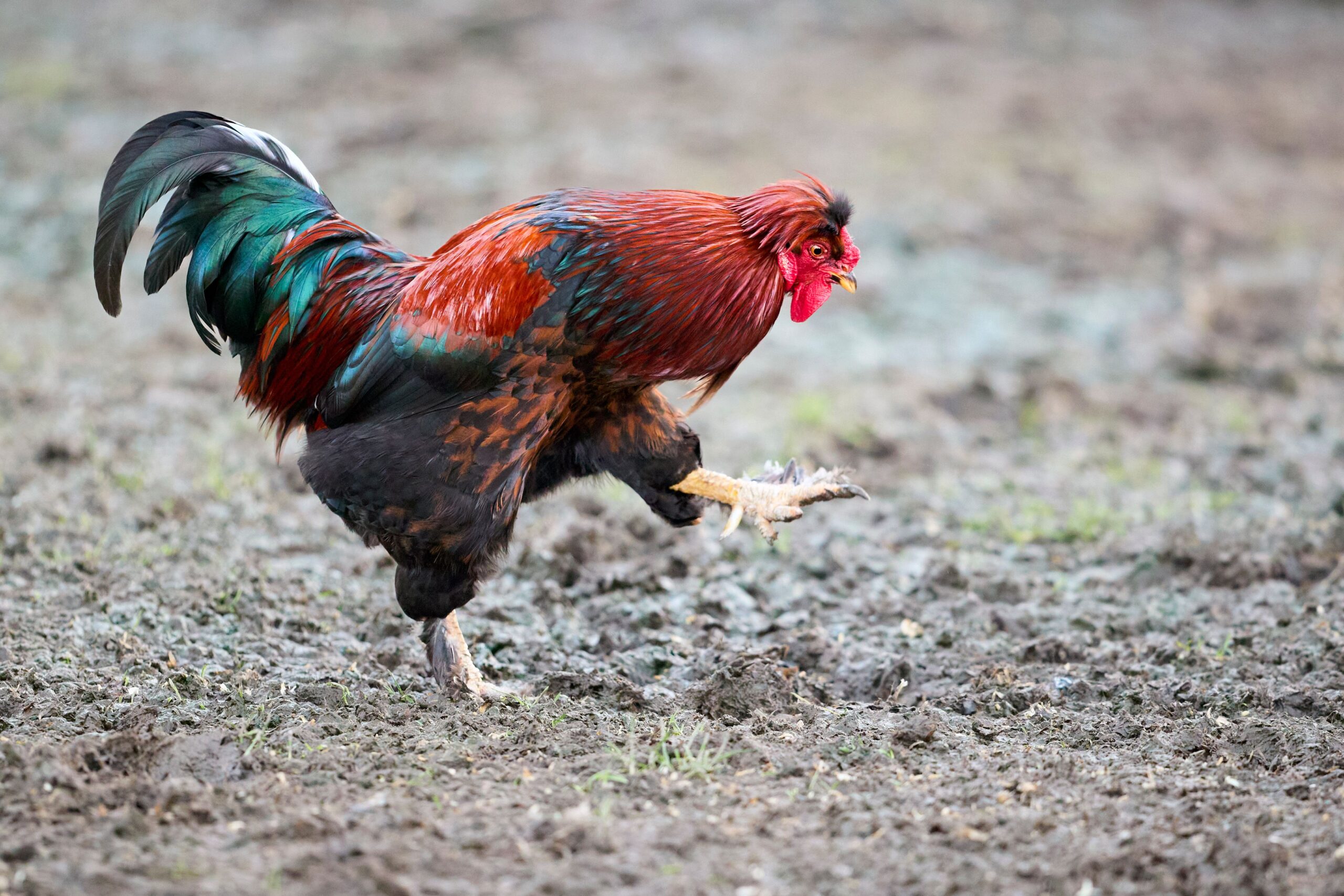
If I had to pick one thing from all of this research that made me immediately start looking around my own coop and run differently, it would be moisture. The evidence here is pretty hard to ignore.
In one laying-hen experiment, researchers compared hens kept on dry litter with hens kept on wet litter. Footpad lesions developed in 38% of the hens on dry litter and 92% of the hens on wet litter.
NINETY-TWO PERCENT.
That got my attention. Broiler studies have also repeatedly found a relationship between wet litter and footpad damage. Broilers aren't the same as our adult backyard laying hens, so I don't want to pretend every finding transfers perfectly. But combined with the laying-hen research, moisture is one risk factor I take very seriously.
It also makes sense mechanically. Constant moisture can soften the skin while the feet remain in contact with their poop and other irritating material. So when I'm thinking about bumblefoot prevention now, I'm not just walking around looking for nails and sharp rocks. I'm looking for:
- Leaking waterers
- Wet bedding
- That one perpetually muddy spot in the run
- Damp areas underneath poop boards
- Anywhere my chickens are repeatedly standing on wet material
Pressure, roosts and walking surfaces
This is the rabbit hole that started my entire bumblefoot research obsession. Several of my hens developed bumblefoot after I had switched my roosts to 2x4s. My immediate reaction was: Did I cause this? So naturally, I went looking for someone to tell me what the perfect chicken roost is. Spoiler alert: science did not cooperate. 😂
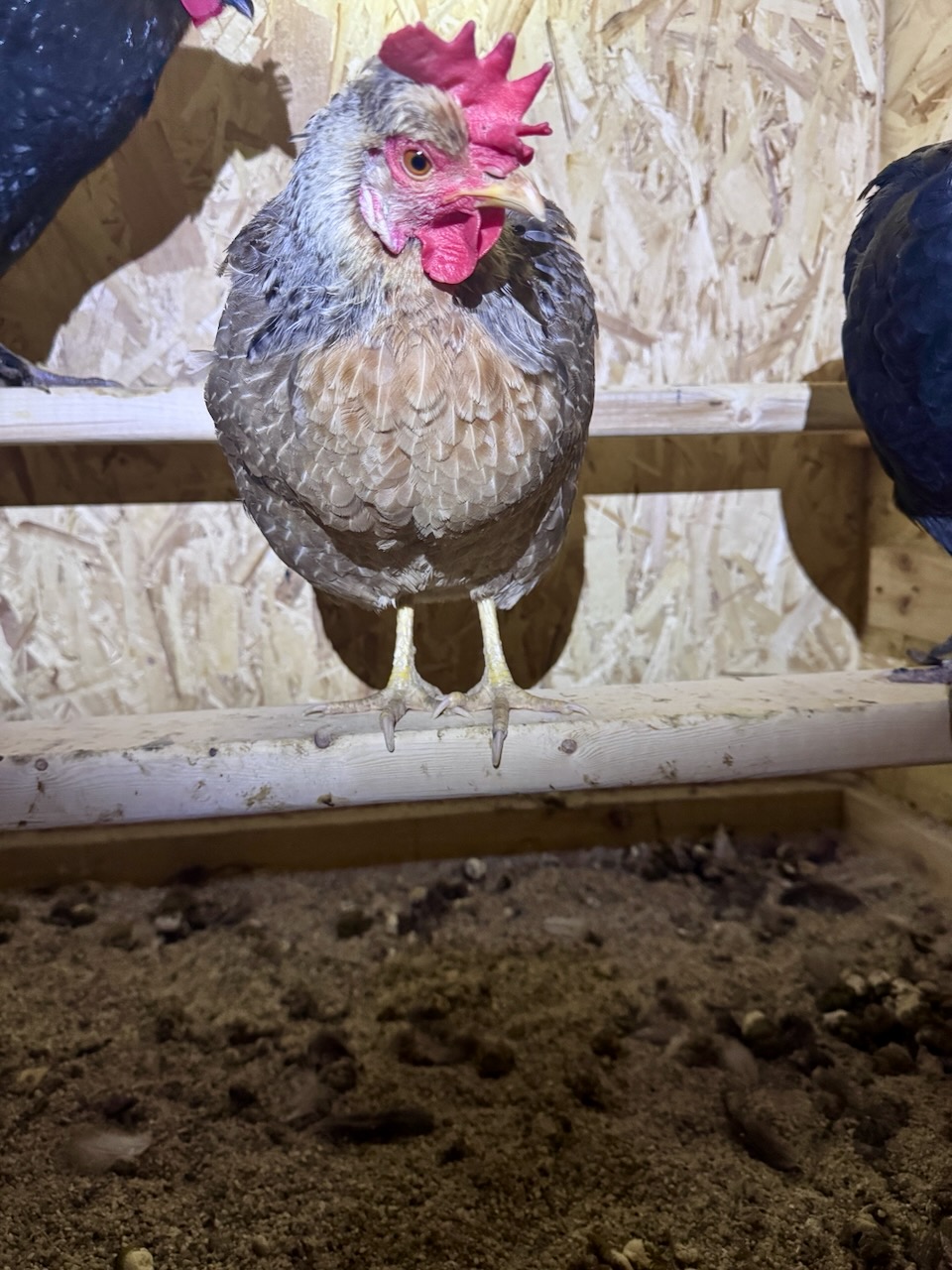
But there is research showing that perch design changes how pressure is distributed across a chicken's foot. One laying-hen study actually used pressure-sensor film underneath the hens' feet and found that perch shape and material changed footpad pressure and contact area. And that's important.
But here's the part we have to be careful with: that study measured pressure. It did not follow backyard chickens for years and determine which roost prevented bumblefoot. A newer perch study found differences in footpad irritation among different perch types, but it still didn't hand us one magical roost design that guarantees healthy feet.
So after digging through all of this, I've stopped thinking about roosts as simply 2x4 = bad or branch = good. Instead, I look at the whole roost.
- Is it stable?
- Is it slippery?
- Are there sharp or rough edges?
- Is the surface abrasive?
- Does it collect manure?
- How does the chicken's foot sit on it?
- Can she balance comfortably?
- And what happens when she gets OFF the roost?
That last one is easy to forget. If a hen jumps four feet down every morning onto a hard surface, I want to think about that too.
Cuts, punctures and injuries still matter
I don't want to swing the pendulum so far that we pretend the traditional explanation for bumblefoot is wrong because it's not. Splinters, sharp objects, scrapes, burns, and frost injuries can damage the skin and give bacteria a way in.
The difference is that I no longer think of an injury as something that has to happen for bumblefoot to develop. It's one possible starting point.
Bedding is more complicated than I expected
This was another one where I desperately wanted the research to say: Use this bedding. Your chickens' feet will be perfect forever. But it didn't.
Researchers have found relationships between footpad health and things like litter type, moisture, particle size, and depth. A bedding material that stays dry in one coop may behave completely differently in another. Climate, ventilation, stocking density, waterers, poop, and how frequently bedding is changed all affect the environment underneath a chicken's feet.
So instead of declaring one bedding material the winner, I've started asking a much more practical question: What condition is this bedding actually in underneath my chickens' feet?
- Is it dry?
- Is it clean enough?
- Is it abrasive?
- Is it packed hard?
- Is it staying wet?
That's more useful to me than simply saying hemp is good, sand is good, pine is bad, or any other blanket statement the research doesn't really support.
Sometimes the problem isn't the environment. It's how the chicken is using her feet.
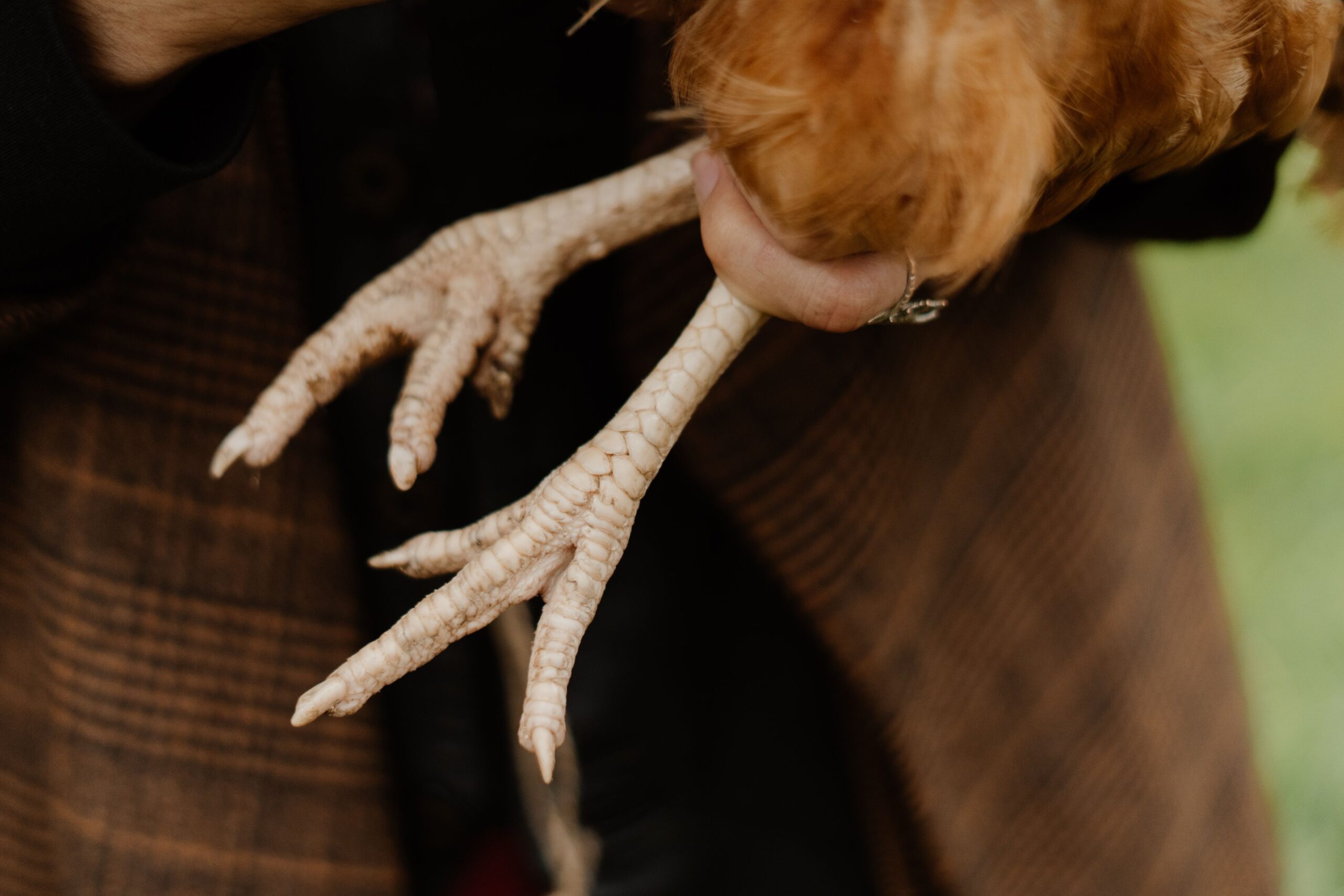
This part doesn't get talked about nearly enough. Imagine a hen hurts her left leg and she starts shifting more weight onto her right foot. Now that foot is carrying more pressure than it normally would, over and over again. Previous injuries, arthritis, leg or foot abnormalities, overgrown nails, inactivity, and excess body condition can all change how pressure is distributed across a chicken's feet.
So now when I check a hen with bumblefoot, I don't stop at the affected foot.
- I watch her walk.
- I look at the other foot.
- I check if her nails are too long.
- I pay attention to whether she's favoring one side.
Because the sore foot might not be the beginning of the story.
Nutrition, age, and genetics may matter too
Here's where the research gets a little fuzzier for backyard flocks.
Nutrition absolutely matters for healthy skin and overall health, and diet can also affect droppings and litter moisture. Researchers have studied nutrients including biotin, zinc, protein, and electrolytes in relation to footpad health, but much of that research involves broilers or turkeys.
So I'm not going to tell you to start adding supplements or changing your hens' protein because you found bumblefoot. Feeding a complete diet appropriate for your flock is still the best place to start.
And age may play a role too. One 2024 study found that footpad problems became more common as laying hens got older. By the final sampling period, about 34% had at least some change to their footpads. That doesn't mean one-third of the hens had severe bumblefoot. Some of those changes were mild. But it does suggest that footpad problems may become more common over time.
And then there's something I find especially interesting: individual susceptibility. Research in commercial poultry suggests genetics can influence how susceptible a bird is to footpad dermatitis. We don't have enough evidence to say that certain backyard breeds are more likely to get bumblefoot than others, but it could help explain something I've wondered about with my own flock.
Why can several chickens live in the exact same coop, sleep on the same roosts, eat the same food, and walk on the same ground, but only some develop bumblefoot? The environment matters, but the individual chicken may matter too.
And then there are the bacteria
Once a foot becomes infected, bacteria become a very important part of the story. Staphylococcus aureus gets most of the attention, and there's good reason for that. In one study looking at bacteria isolated from laying hens with pododermatitis, S. aureus accounted for 75 of 111 isolates, or 68%. But other bacteria were found too. This is another reason I don't love reducing bumblefoot to “a staph infection.”
Finding bacteria in an established lesion doesn't necessarily tell us what damaged the foot in the first place. The bacteria may be part of the result, not the original cause. And if a substantial infection isn't healing, keeps returning, or seems to be getting worse, that's where veterinary testing such as a culture can become useful.
So how am I trying to prevent bumblefoot now?
I wish I could give you a magical checklist that guarantees you'll never see another black spot on a chicken foot, but I can't. Bumblefoot is multifactorial, and frankly, there are some frustrating holes in the research, especially when we're talking specifically about mature backyard laying hens.
But there are things we can control.
- I check feet regularly, especially if I notice anyone limping or sitting more than usual.
- I pay attention to moisture. Leaky waterers, wet bedding, and muddy high-traffic areas get my attention much faster now.
- I inspect roosts with my hands, not just my eyes. I want to feel anything rough, sharp, or splintered.
- I look at landing areas and the surfaces my chickens spend their days walking on.
- I check the length of their nails.
And maybe most importantly, if I start seeing foot problems in more than one chicken, I assume there's something worth investigating. Because six chickens developing bumblefoot was what made me question my own setup in the first place.
Okay, you found bumblefoot. Now what?
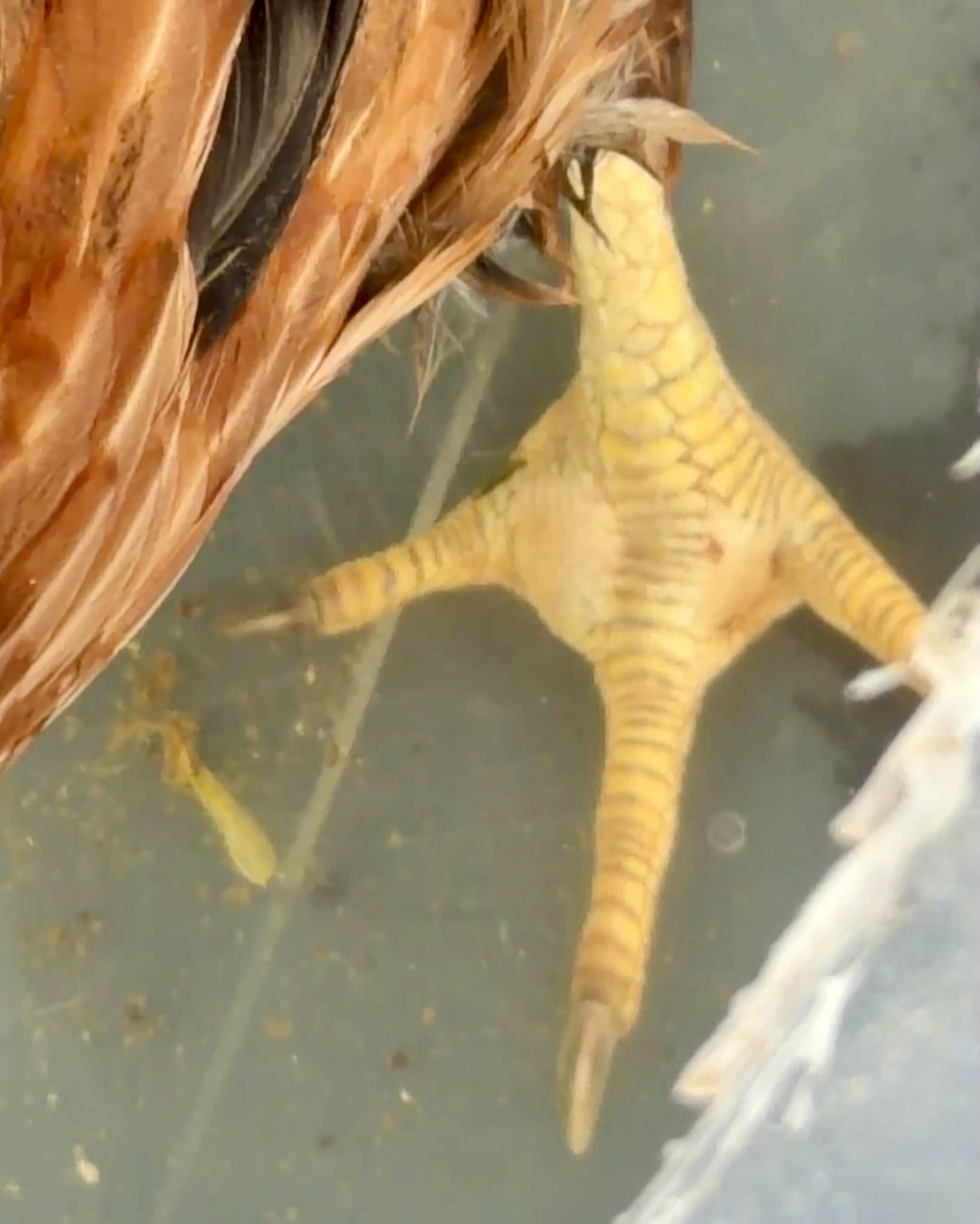
This is the part where I've changed my thinking the most. My first step now is not to grab a scalpel. First, I examine the entire foot, and then the other foot.
- Is there a tiny superficial spot, or significant swelling?
- Is the skin intact?
- Is the foot hot?
- Is there drainage?
- Is she putting weight on it?
- Is she limping?
- Is she eating, drinking, and acting normally?
I also take a picture. That gives me something objective to compare against instead of relying on my memory three days later. And then I start looking for the why. What's happening in her environment? Is there something continuing to put pressure on that exact area while I'm trying to get it to heal?
Watch for early signs
If I'm seeing mild irritation or a small surface change with intact skin, I'm thinking about protecting that foot and removing whatever may be contributing to the irritation. That could mean getting her away from wet bedding, changing an abrasive surface, or reducing pressure on the area.
And then I watch it closely to see if it's getting larger, painful, swollen, or simply isn't improving; that's when I want veterinary guidance.
If there's a scab, swelling, tenderness, or an open area
Now I'm more cautious. This may need cleaning, protection, pressure relief, pain management, or medication depending on what's actually happening inside that foot. And this is where I've changed my own approach dramatically.
I don't routinely cut bumblefoot out anymore
This one is hard for me to write. I treated some of my hens the way I had learned to treat bumblefoot online. I soaked the foot, removed the scab and kernel, wrapped the foot, and sent them on their way.
But after treating several feet that way, I started feeling like some of them were getting worse instead of better. Could I prove that removing the scab caused that? No. There were too many variables involved, and some advanced cases genuinely do require debridement.
But I started asking myself a question I couldn't shake: Why am I cutting into my chicken's foot simply because there's a black scab there? A scab alone doesn't tell me there's an abscess underneath it, how deep the lesion goes, and it certainly doesn't tell me I'm qualified to determine what tissue should and shouldn't be removed.
Cutting into the foot can cause additional tissue damage and pain. And if an infection has reached deeper structures, removing something from the surface hasn't necessarily solved the problem anyway. So I don't recommend cutting into a chicken's foot at home as the routine treatment for bumblefoot.
If surgical debridement is actually necessary, I'd much rather have a veterinarian determine that and perform it with appropriate pain management and aftercare. I really wish I had understood that sooner.
But I do now, and that's why I'm sharing it.
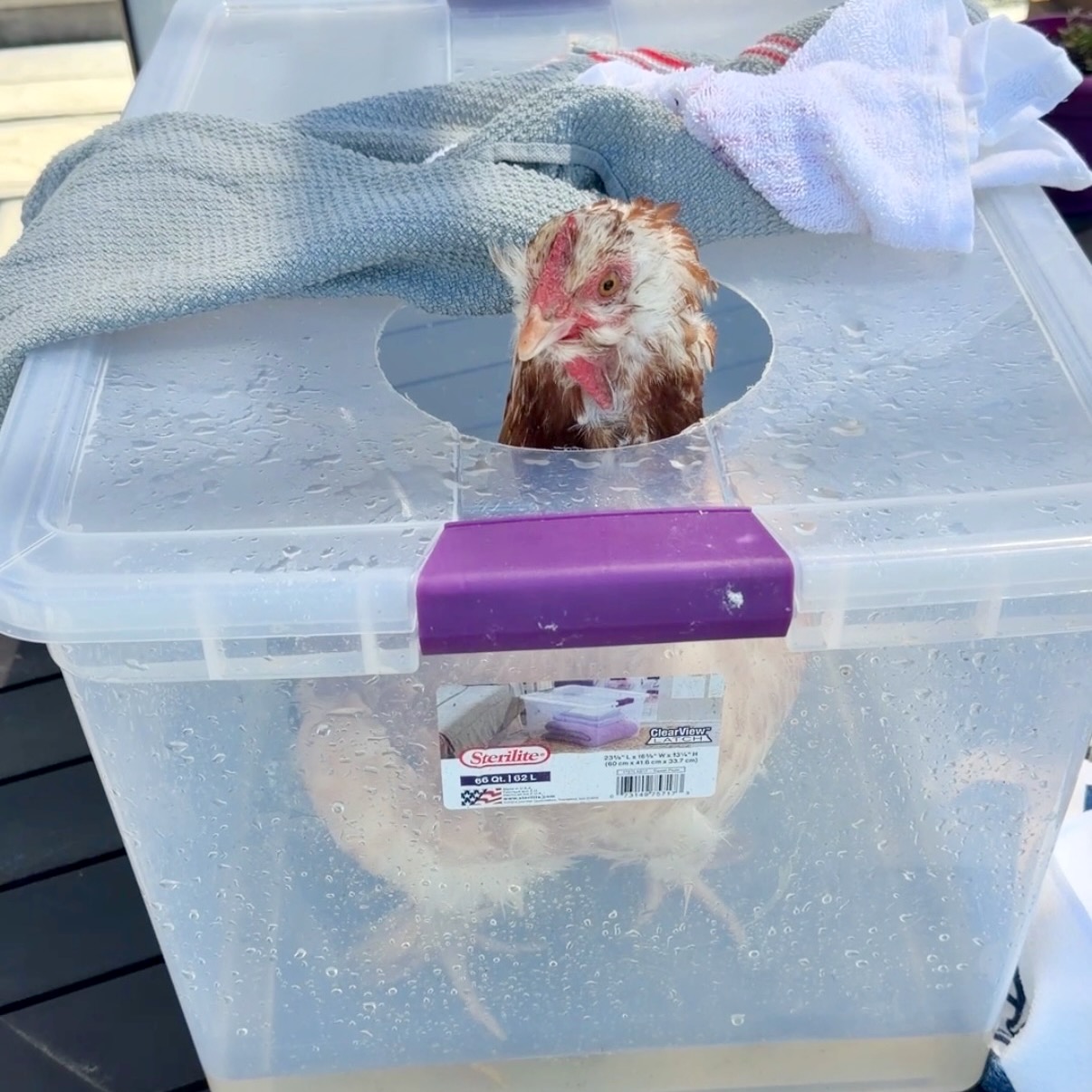
What about Epsom salt, chlorhexidine, and antibiotic ointment?
This is another area where chicken-keeping advice tends to turn into a giant list of things to put on the foot.
The University of Maryland Extension includes things like Epsom salt or chlorhexidine soaks, dressings, antibiotics, and veterinarian-performed surgery among possible treatments. But possible treatments aren't the same thing as one treatment protocol that should be used for every chicken.
I couldn't find good chicken-specific trials showing that there's one perfect Epsom-salt concentration or soaking schedule that cures bumblefoot. I also couldn't find good evidence that a topical treatment alone will resolve an established deep abscess. And antibiotics are something I especially want veterinary guidance on, both because we want to use the right medication for the bacteria involved and because many of us eat our hens' eggs.
What I'm much more interested in now is protecting the healing tissue and relieving pressure while addressing whatever contributed to the injury in the first place. Because that foot still has one enormous problem: The chicken has to keep walking on it.
When I would call a veterinarian
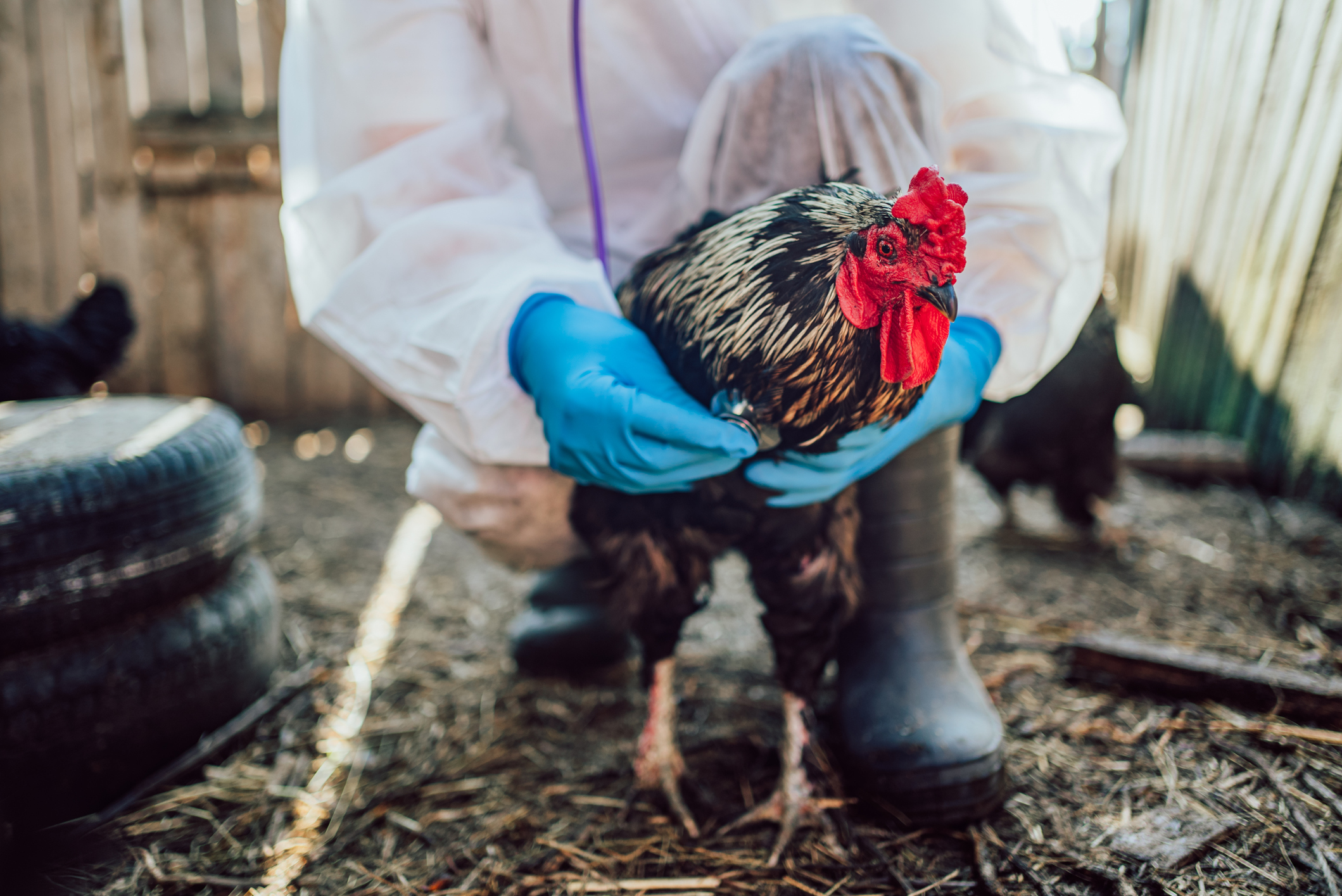
If my chicken is noticeably limping, won't put weight on the foot, has substantial swelling, drainage, an enlarging lesion, worsening pain, repeated bumblefoot, or seems sick overall, I'm getting veterinary help.
At that point, there may be more going on underneath the surface than I can see. A deeper infection may require imaging, culture, prescription medication, or surgical treatment with appropriate pain control. And that's a very different situation from finding a tiny early lesion during a routine foot check.
The biggest thing bumblefoot has taught me
I used to see the black scab and think: There's the problem. Now I see it and think: There's the clue.
- What changed?
- Is something wet?
- Is there a muddy area everyone stands in?
- What's happening on the roost?
- What does the landing area look like?
- Are her nails too long?
- Is she favoring the other leg?
- Is she carrying extra weight?
- Are any of my other chickens developing early footpad changes?
Sometimes I may find an obvious answer. Sometimes I won't. And that's the frustrating reality of a condition influenced by this many different factors. But I've completely changed the way I think about bumblefoot.
A black scab tells me where to look. It doesn't tell me why it happened. And treating that black spot without asking what caused the foot to become damaged in the first place may mean we're only treating half the problem.
So if you find bumblefoot in one of your chickens, treat the chicken in front of you. But then investigate. Her feet may be trying to tell you something.
This article is educational and isn't a substitute for veterinary diagnosis or treatment. A chicken with a painful, infected, worsening, or persistent lesion should be evaluated by a poultry-experienced veterinarian.
Research & Veterinary Sources
Silicone Shoes for the Treatment of Foot Pad Dermatitis in Pet Chickens, 2024.
University of Maryland Extension. Leg Health in Chickens (FS-1179).
USDA APHIS. Pododermatitis (Bumblefoot) in Birds, 2025.
Wet litter and perches as risk factors for the development of foot pad dermatitis in floor-housed hens, 1998.
MSD Veterinary Manual. Staphylococcosis in Poultry.
Effect of litter moisture on the development of footpad dermatitis in broiler chickens, 2014.
Pressure load on keel bone and foot pads in perching laying hens in relation to perch design, 2011.
Perch shape and material affect perch use and health parameters of laying hens, 2024.
Factors associated with footpad dermatitis in German laying hens, 2024.
Footpad dermatitis in poultry: a review, 2010; The nutrition of poultry as a factor affecting litter quality and foot pad dermatitis, 2017.
Management and medicine of backyard poultry, 2015.
Genetic parameters of foot-pad dermatitis and body weight in purebred broiler lines, 2012.
Characterization of prevalent bacterial pathogens associated with pododermatitis in table egg layers, 2018.
One thought on “Bumblefoot in Chickens: What Causes It, How to Prevent It, and What I Do Differently Now”