
The Essential Guide to Chicken Dust Baths
If you've ever watched a chicken flop onto her side, kick dirt all over herself and start thrashing around like something has gone terribly wrong, congratulations: you've witnessed a perfectly normal chicken dust bath.
The first time I saw one of my chickens dust bathing, I genuinely thought something was wrong. I kept interrupting her to check on her, which I know she didn’t appreciate. But now it's one of my favorite chicken behaviors to watch. They always look like they’re really enjoying themselves.
But dust bathing isn't just something chickens enjoy doing. It's a natural maintenance behavior that plays an important role in feather care and chicken welfare. And after keeping chickens for years, experimenting with different dust bath mixtures and digging into the research, I've changed the way I think about what belongs in a chicken dust bath.
You don't need a complicated recipe filled with eight different ingredients.
What matters most is giving chickens the right kind of substrate to perform the behavior they're instinctively trying to perform. So let's look at what chickens actually need, what the research tells us and what I've learned from watching my own flock.
Why Do Chickens Dust Bathe?
Dust bathing is a normal, instinctive chicken behavior.
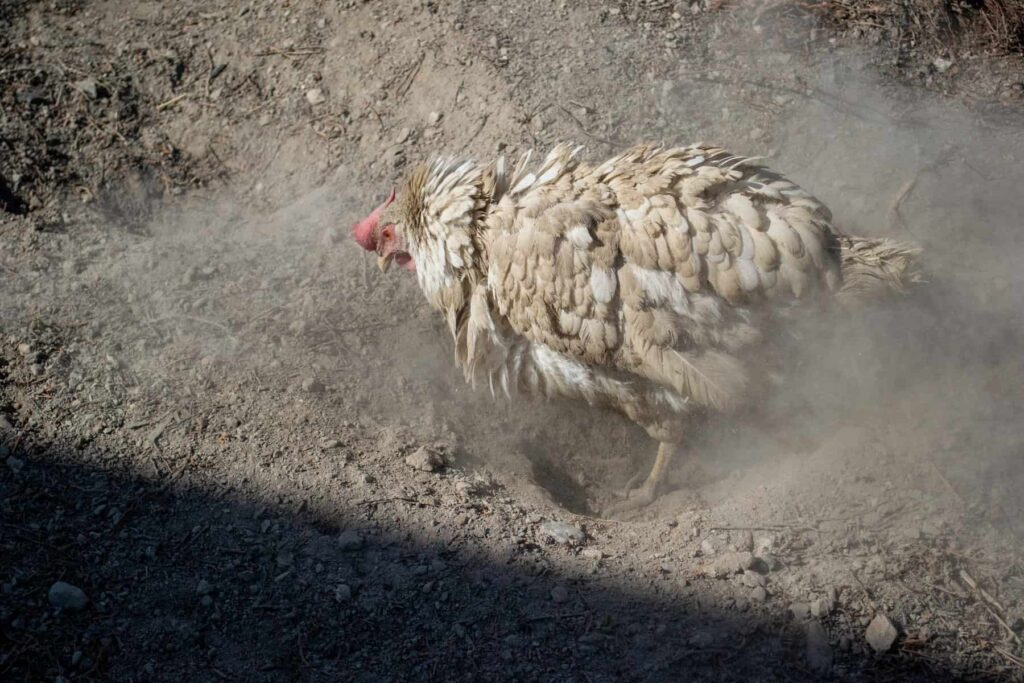
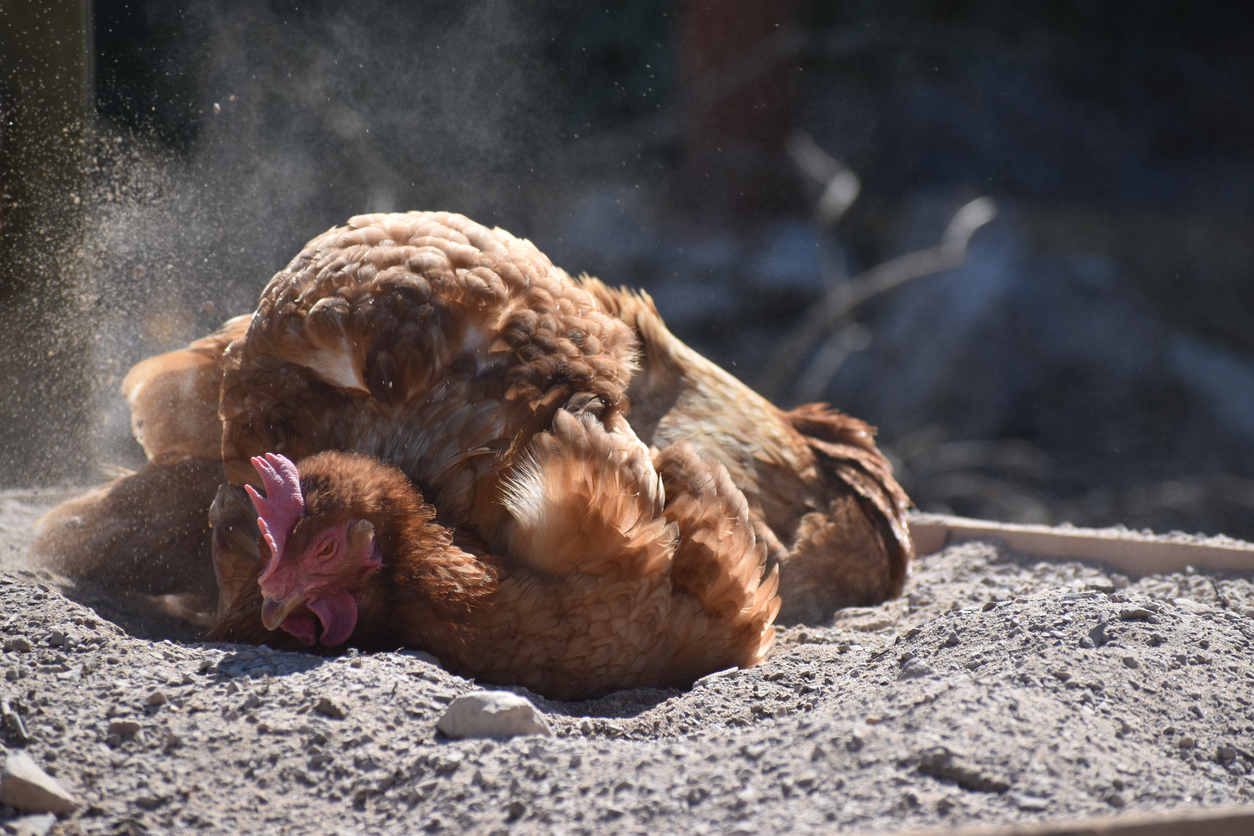
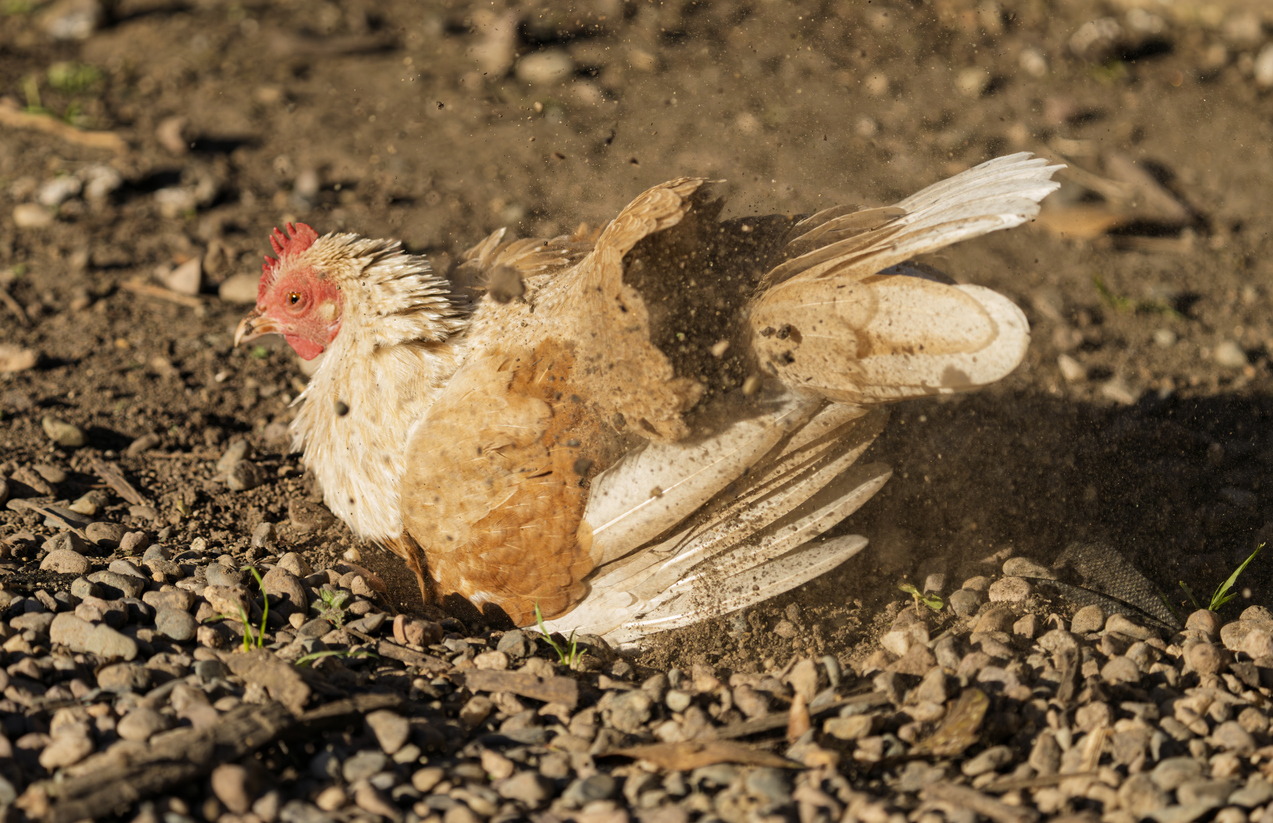
A chicken will typically scratch and peck at loose material, lower herself into it, fluff her feathers and begin kicking the substrate through her plumage. You'll see wing shaking, scratching, head rubbing and rolling before she eventually stands up and sends an impressive cloud of dust flying.
There's a purpose behind all that flapping. One important function of dust bathing is feather maintenance, particularly regulating the amount of oil, or lipids, on the feathers. Chickens naturally distribute oils from their preen gland through their feathers. Over time, excess lipids can accumulate.
Research has found that when hens were prevented from dust bathing, the amount of lipid on their feathers increased. When they regained access to a suitable dust-bathing substrate, feather lipid levels decreased again.
The material chickens bathe in also appears to matter. In research comparing sand with wood shavings, sand particles were able to penetrate farther into the plumage and were more effective at removing excess feather lipids.
In other words: Chickens aren't just rolling around in dirt because it feels good. They're working fine particles through their feathers as part of maintaining their plumage.
Dust bathing may also play a role in helping chickens manage external parasites, but it's important not to turn a normal dust bath into a parasite treatment station. A good dust bath supports normal grooming behavior. It does not guarantee a mite or lice-free chickens.
What Makes a Good Chicken Dust Bath?
This is where my thinking has changed the most.
Instead of asking: "What ingredients should I put in my chicken dust bath?” I think the better question is: "What does a chicken need the substrate to do?"
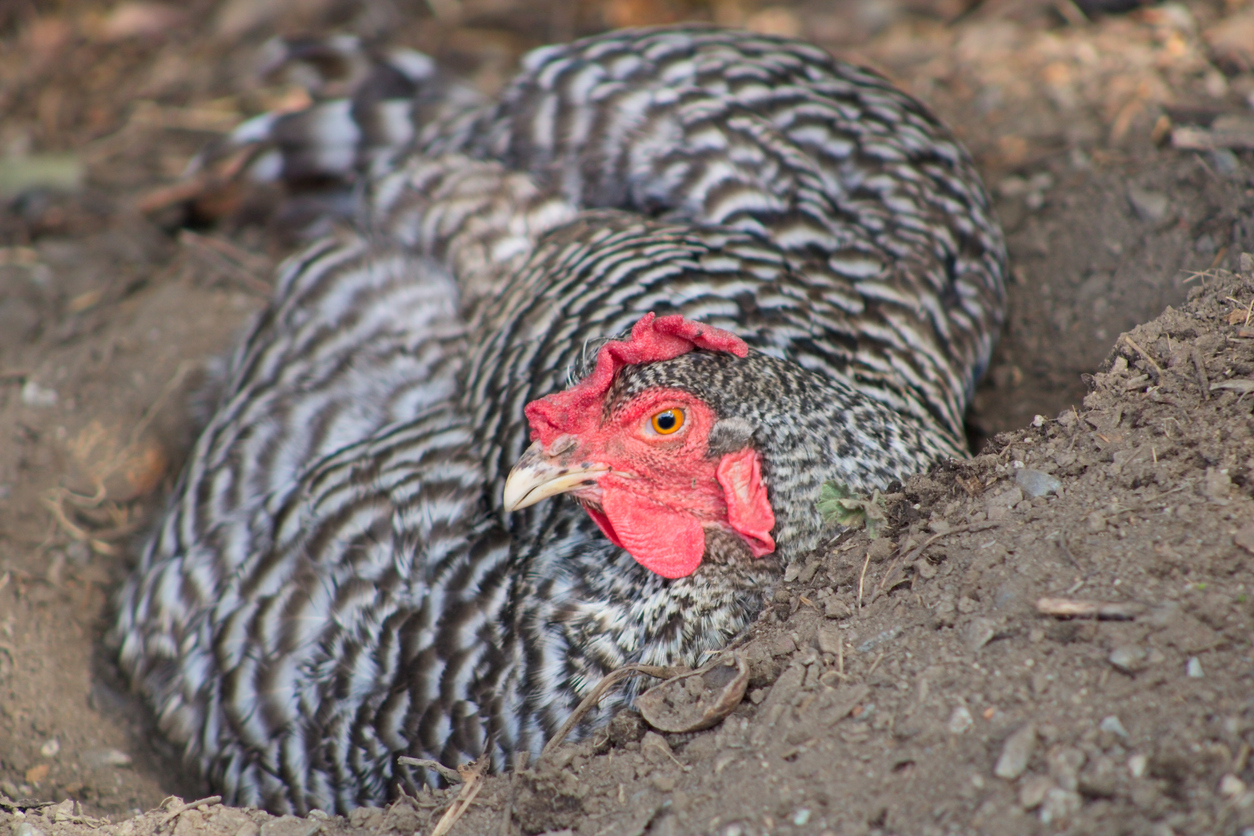
Research suggests chickens are particularly attracted to substrates that are loose and easy to manipulate, and the material needs to be able to work through the feathers for effective dust bathing.
A good dust bath should therefore be:
- Dry
- Loose and crumbly
- Fine enough to move through the feathers
- Easy to scratch and kick around
- Free from pesticides, chemicals and contaminants
- Relatively low in excessive airborne dust
You don't need to hunt down a magical combination of ingredients. Sometimes dry, loose dirt is already a perfectly good chicken dust bath.
Do Chickens Prefer Sand and Peat Moss?
This is one of the most interesting things I found when I started looking at the research.
A 2020 meta-analysis examined studies comparing different substrates offered to chickens. Across those studies, chickens performed more dust-bathing behavior in sand and peat moss than in wood-based and several other tested substrates.
But there's an important distinction. That does not mean research has proven chickens prefer peat moss or sand over natural dirt.
Natural soil wasn't adequately tested head-to-head in those experiments to make that conclusion. In fact, researchers have suggested that one reason chickens may readily use sand and peat is because those materials share some of the characteristics of the loose soil chickens naturally use for dust bathing.
So I wouldn't rank dust bath materials as 1. peat moss 2. sand 3. dirt. Because we simply don't have the evidence to do that.
But what we can say is that sand and peat moss have performed well in dust-bathing research, particularly when compared with materials such as wood shavings. And that brings me to something interesting I noticed in my own flock.
The Day 11 Chickens Piled Into My Dust Bath
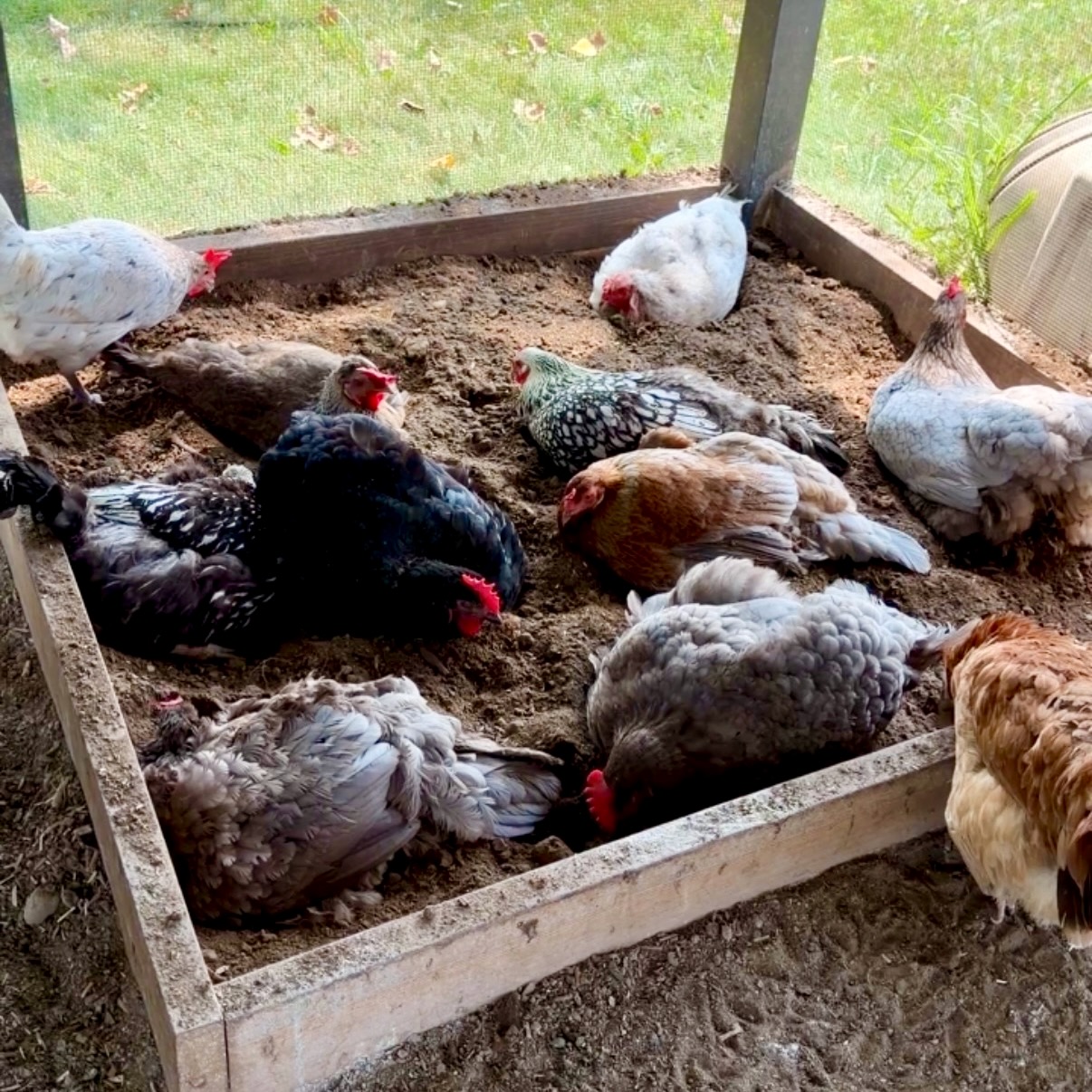
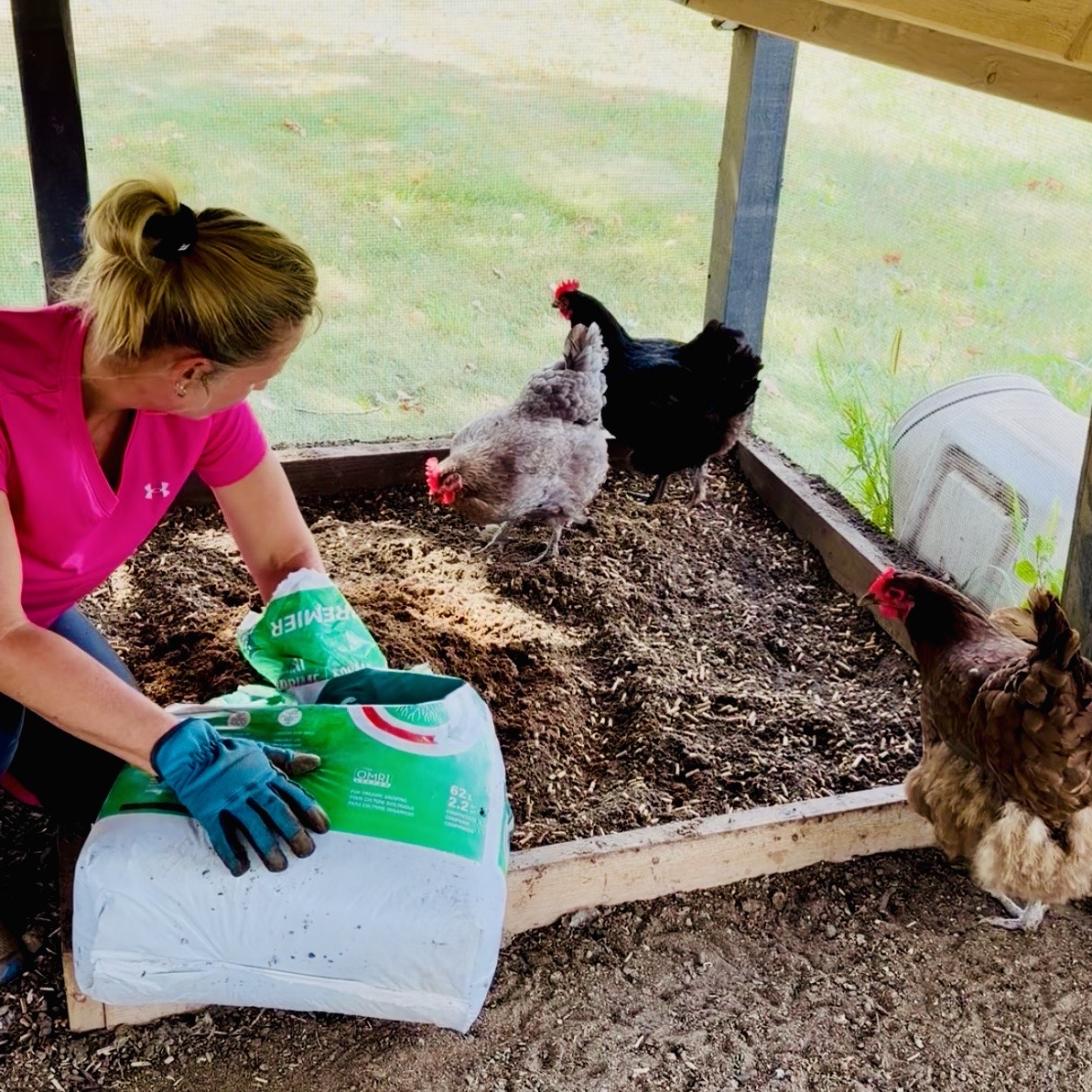
I've maintained a dedicated dust bath area for my chickens for years, and they've always used it. Recently, I decided to experiment with adding peat moss and their reaction was immediate.
At one point I counted 12 chickens dust bathing at the same time. I had never seen that many of my chickens use the dust bath at once. Now, let's be clear: twelve enthusiastic chickens in my backyard is not a scientific study. But it made me curious. Why did they seem so attracted to it?
When I started researching dust-bathing substrate preferences, I discovered that peat moss repeatedly appears in poultry research as a substrate chickens readily use for dust bathing. That doesn't prove peat moss is "better" than dirt, nor does it mean every chicken will react the way mine did. But it certainly made my little backyard observation more interesting.
What Should You Put in a Chicken Dust Bath?
My current dust bath philosophy is surprisingly simple. Start with the physical qualities chickens need rather than trying to check ingredients off a list. Here's how I think about the most common options.
Dry Dirt or Soil
Let's start with the obvious one: Dirt.
Chickens have been dust bathing in soil long before humans started creating elaborate Pinterest dust bath recipes for them. If you have naturally dry, loose soil, your chickens may happily create their own dust-bathing areas without any help from you.
The problem comes when your soil contains a lot of clay, stays damp or becomes hard and compacted. That's when adding other substrates can help keep the dust bath loose and usable.
And importantly, we do not currently have good evidence showing that peat moss or sand is inherently more effective than suitable natural soil. So if your chickens have access to beautiful, dry, loose dirt and happily dust bathe in it, don't feel like you need to fix something that isn't broken.
Sand
Sand has some of the strongest direct evidence behind it as a dust-bathing substrate. Researchers have shown that sand can work its way through a chicken's plumage and help remove excess feather lipids. Chickens have also readily used sand in substrate-preference studies.
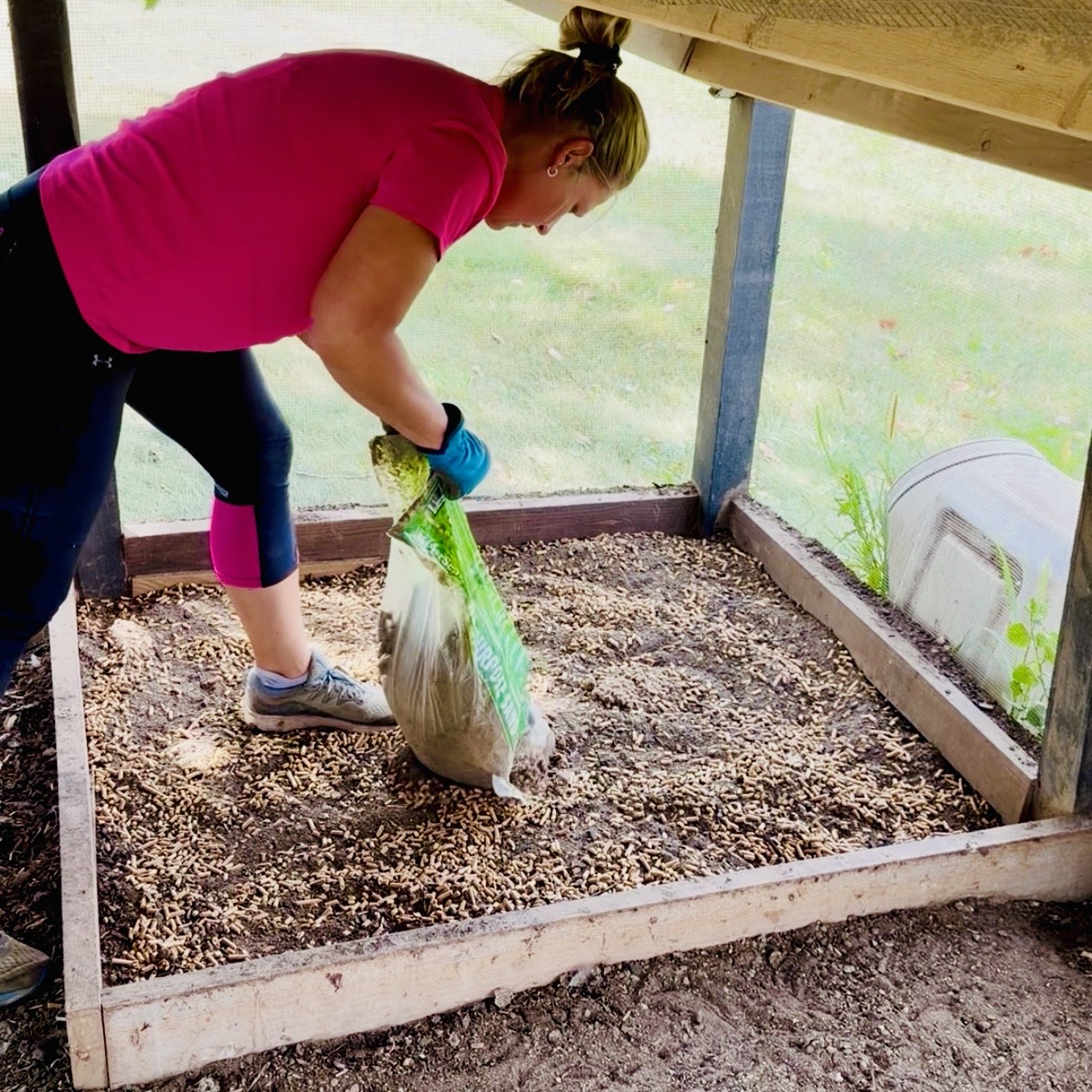
I use sand as part of my own dust bath mixture because it helps create the loose texture I'm looking for. My soil gets very hard and compact so I need additives to keep it loose.
When choosing sand, I make sure its either all-purpose or construction sand and not play sand. Play sand is too fine for chickens which may cause respiratory issues. I choose clean, untreated sand that remains loose and doesn't contain added chemicals or contaminants.
I also avoid excessively dusty products. Remember: your chickens are intentionally going to launch this material through their feathers and into the air.
Peat Moss
Peat moss has become one of the most interesting ingredients in my dust bath. It's incredibly lightweight, loose and easy for chickens to work through their feathers.
Research has repeatedly shown chickens readily dust bathing in peat, and some studies have found strong motivation or preference for access to it. My own flock certainly seems to agree.
But peat moss isn't perfect.
It can be expensive, availability varies, and there are legitimate environmental and sustainability concerns surrounding peat harvesting. That's actually one reason I'm continuing to experiment with different substrates. I'm interested in finding materials that provide similar physical characteristics without necessarily relying heavily on peat moss.
Sawdust
I've used clean, untreated sawdust in my chickens' dust bath mixture, and sawdust has also been studied as a dust-bathing substrate in poultry research.
It's important to distinguish sawdust from wood shavings. They're sometimes grouped together as wood-based substrates, but their particle sizes and physical properties are very different. Research showing that larger wood shavings don't penetrate the plumage as effectively as sand should not automatically be applied to fine sawdust.
Studies looking specifically at sawdust have produced mixed results. In one long-term study, hens used sand and sawdust baths to a similar extent and actually performed dust-bathing behavior more frequently in sawdust. Other preference studies have found hens choosing peat moss over sawdust.
What I haven't found is research directly comparing how effectively fine sawdust removes excess feather lipids compared with sand or peat. So for now, I consider clean, untreated sawdust a reasonable dust bath substrate or addition, but not one we can claim has the same demonstrated feather-lipid-removing effect as sand and peat.
Because very fine sawdust can become airborne, I would also avoid excessively dusty material and only use sawdust from clean, untreated wood.
Clean Wood Ash
Wood ash is another traditional dust bath addition you'll see recommended frequently.
Its fine texture makes intuitive sense as something chickens can work through their plumage, but the evidence supporting wood ash specifically as a necessary dust bath ingredient is much weaker than the internet often makes it sound.
I consider it optional.
If you choose to use wood ash, only use ash from clean, untreated wood. Never use ash from treated or painted lumber, trash fires, charcoal products containing additives or fires where chemicals or accelerants were used.
And because ash is extremely fine, I wouldn't go overboard. More powder does not automatically create a better dust bath.
What About Diatomaceous Earth?
Diatomaceous earth, or DE, is probably one of the most debated chicken dust bath ingredients.
You'll find plenty of dust bath recipes that treat DE as an essential ingredient because of its ability to affect certain insects. But there's a problem with routinely adding very fine powders to an area where chickens intentionally kick material into the air.
Respiratory exposure matters.
There is some evidence supporting the use of diatomaceous earth against certain poultry ectoparasites under particular conditions, but that doesn't make it necessary for normal dust bathing. I don't think a healthy dust bath needs to double as an insecticide.
If you're dealing with mites or lice, identify what you're dealing with and use an appropriate treatment strategy rather than relying on the dust bath alone.
What About First Saturday Lime?
I've used First Saturday Lime in my own dust bath mixture, but this is another area where my thinking has evolved. I don't consider it an essential component of a chicken dust bath.
The primary purpose of the dust bath is to give chickens an appropriate substrate for natural dust-bathing behavior and feather maintenance. If you're using any commercial product around chickens, follow the manufacturer's current directions and safety information.
But don't feel like you need to add a pest-control product to create a "complete" dust bath. Dirt and sand don't need seventeen ingredients to become useful.
Adding Herbs to a Chicken Dust Bath
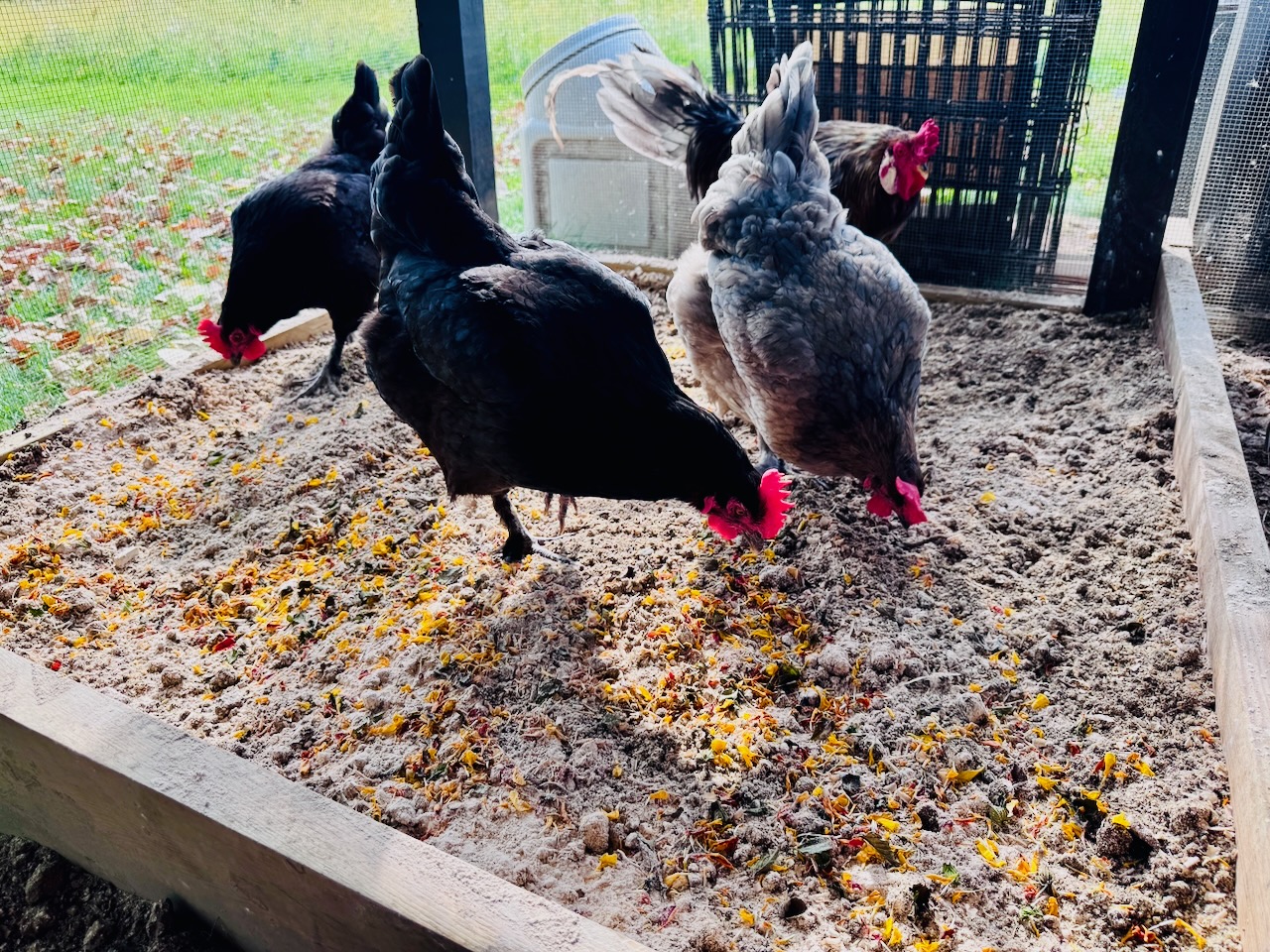
I love adding herbs and flowers to my chickens' dust bath, and that's something I plan to continue doing.
I commonly use things like mint, marigold, lavender and other chicken-safe herbs from my garden. They add variety to the dust bath, smell wonderful, and give my chickens another natural material to investigate, peck at and scratch through.
But I've changed the way I talk about why I add them.
You'll often see individual herbs recommended for chicken dust baths with very specific claims: lavender to calm chickens, oregano to support immunity, mint to repel pests, calendula to improve skin and feather health, and so on.
There is research into many plants and the compounds they contain, including research involving poultry. But that's different from demonstrating that adding a handful of a particular dried herb to a dust bath provides those same benefits.
Right now, there simply isn't much research looking specifically at herbs as components of chicken dust baths. But that doesn't mean herbs don't have benefits in a dust bath. It just means that we don't know yet. And personally, I think that's an exciting distinction.
There's still so much we can learn about the materials chickens choose to interact with and how different additions might affect dust-bathing behavior. Could certain herbs make a dust bath more attractive? Do chickens interact differently with different botanical materials? Could some plants have measurable effects on external parasites when used this way? Could seasonal herb mixtures provide meaningful enrichment?
Those are questions I'd love to see studied.
For now, I use herbs because I enjoy offering my chickens a variety of safe, natural materials and observing how they interact with them. I just don't want to promise a specific health benefit that research hasn't demonstrated yet.

Herbs and Flowers I Like to Use
Some of my favorites include:
- Mint
- Marigold or calendula
- Lemon balm
- Lavender
- Chamomile
- Oregano
- Rosemary
If you're adding plants to your chickens' environment, always make sure you've correctly identified them and that they're safe for chickens. I also prefer plain herbs without pesticides, artificial fragrance, essential oils or other added ingredients.
You certainly don't need herbs to create an effective dust bath. The substrate itself is what allows chickens to perform the physical act of dust bathing and maintain their feathers. But does that mean I'm going to stop sprinkling beautiful herbs and flowers into mine?
Absolutely not.
Sometimes chicken keeping isn't about finding the longest list of scientifically proven benefits. Sometimes it's about giving your flock a safe environment with interesting things to explore, watching what they choose to do with them, and staying curious about the questions science hasn't answered yet.
Can Dust Baths Prevent Mites and Lice?
Dust bathing is part of a chicken's normal grooming behavior and may contribute to ectoparasite management. But a dust bath cannot guarantee that your chickens won't get mites or lice.
That's an important distinction because many homemade dust bath recipes are essentially marketed as natural parasite preventatives. If you suspect external parasites, examine your chickens closely, especially around the vent, underneath the wings and near the bases of the feathers. Then identify what you're dealing with.
Different poultry parasites behave differently and may require different treatment approaches. Don't assume that adding more DE, ash, herbs or other powders to the dust bath will treat an established infestation.
What I Would NOT Put in a Chicken Dust Bath
I prefer keeping dust baths relatively simple. I avoid:
- Scented or clumping cat litter
- Soil contaminated with pesticides or herbicides
- Ash from treated or painted wood
- Ash contaminated with chemicals or accelerants
- Artificial fragrances
- Essential oils
- Moldy or damp material
- Excessively dusty materials
And I wouldn't add an ingredient solely because someone online says it's “natural." Natural doesn't automatically mean safe, necessary or effective.
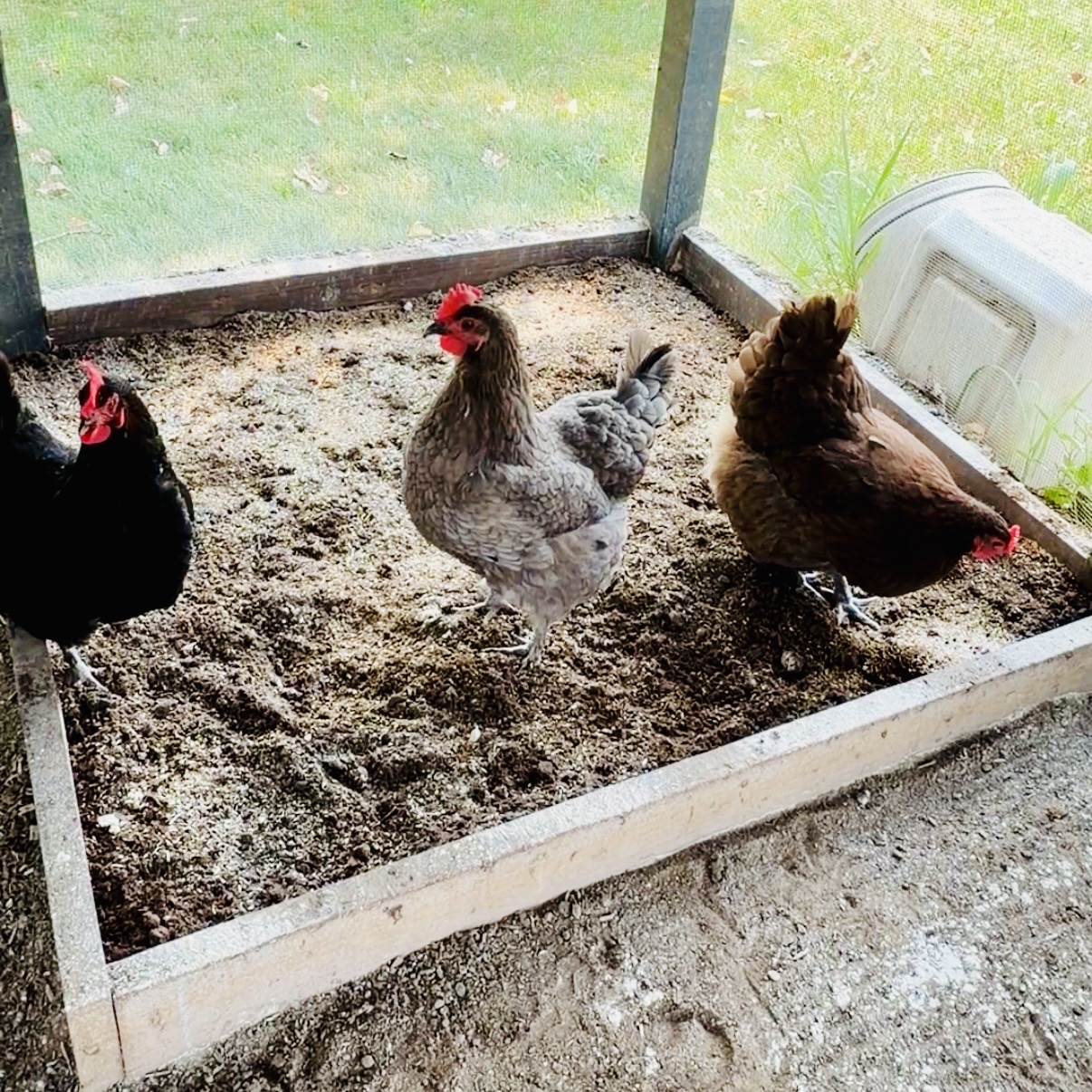
Where Should You Put a Chicken Dust Bath?
You can create the world's greatest chicken dust bath, but if the first rainstorm turns it into a tiny poultry swimming pool, your chickens aren't going to get much use out of it. The most important consideration is keeping the substrate dry and loose.
I prefer a covered area where my chickens can access their dust bath regardless of the weather. Depending on your setup, you could use:
- A designated section of the run
- A large shallow tub
- An old tire
- A kiddie pool
- A livestock or concrete mixing tub
- A raised garden bed
- A naturally dry area of loose soil
And if you have room, go bigger than you think you'll need because dust bathing can be surprisingly social.
How Deep Should a Chicken Dust Bath Be?
You'll find very specific measurements online for how large or deep a chicken dust bath supposedly needs to be, but I haven't found good scientific evidence supporting one magical backyard dust bath dimension.
Instead, give chickens enough loose material that they can dig a shallow depression, settle into it and repeatedly kick substrate through their feathers without immediately hitting a hard bottom.
Several inches of loose material works well in my setup, but I pay more attention to how my chickens interact with the dust bath than whether I've reached a specific measurement.
Your chickens are excellent product testers. Watch them.
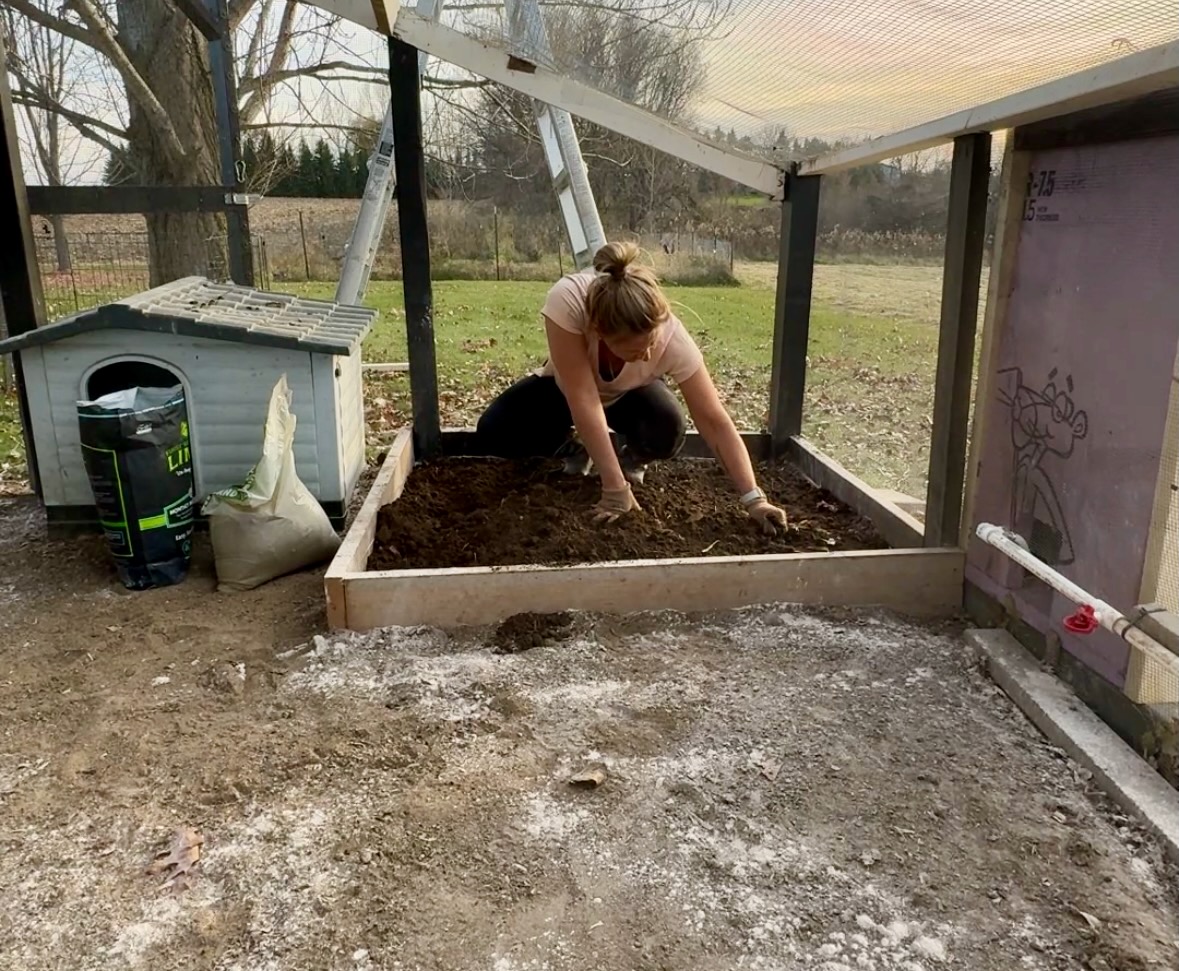
How to Maintain a Chicken Dust Bath
Dust bath maintenance doesn't need to be complicated.
You want to remove their excessive poo, wet material and large accumulations of feathers, break apart areas that become compacted, and add or replace substrate when needed.
And above everything else: Keep it dry. Moisture changes the physical properties of the substrate and can make it much more difficult for chickens to work the material through their feathers.
Researchers have also pointed out that characteristics such as particle size, moisture and contamination may influence how chickens interact with dust-bathing substrates, and these variables deserve more study. The condition and physical characteristics of the material may be just as important as what's written on the bag.
My Current Chicken Dust Bath Mixture
So after all this research, what do I actually use? My dust bath has evolved over time, and right now I build it around a combination of dry soil, sand and peat moss, with other additions treated as optional rather than essential.
The goal isn't to create the longest ingredient list possible. It's to maintain a dry, loose substrate my chickens actively want to use. And I'm still experimenting.
I'm particularly interested in finding sustainable, readily available materials that could provide some of the characteristics chickens seem to love about peat moss. That's part of the fun of keeping chickens.
We can read the research. We can learn from other chicken keepers. But we can also watch what's happening right in front of us. Watching your flock will be your biggest indicator of what actually works best.
The Bottom Line
If there's one thing I hope you take away from this guide, it's this: You don't need a complicated recipe to create a good chicken dust bath.
Chickens need access to dry, loose material they can scratch into, settle down in and work thoroughly through their feathers. And natural soil may already provide exactly that.
Sand has good research behind its ability to penetrate the plumage and remove excess feather lipids. Peat moss has performed well in substrate-preference research and has certainly been a hit with my own flock. Other ingredients, such as sawdust, wood ash and herbs, can be optional additions, but we don't need to assign health benefits to them that haven't actually been demonstrated.
Give your chickens the right environment and watch what they do with it.
Question the advice we've all repeated for years and when the evidence gives us a reason to change how we do something, change it. That's what rethinking chicken keeping is all about.
Research & Further Reading
Monckton V, Ellis JL, Harlander-Matauschek A. Floor Substrate Preferences of Chickens: A Meta-Analysis. Frontiers in Veterinary Science. 2020.
van Liere DW. Dustbathing as related to proximal and distal feather lipids in laying hens. Behavioural Processes. 1992.
van Liere DW, Bokma S. Research examining dust bathing and feather lipid maintenance in laying hens.
de Jong IC, et al. Strength of preference for dustbathing and foraging substrates in laying hens. Applied Animal Behaviour Science. 2007.
Additional poultry health and ectoparasite guidance referenced from university Cooperative Extension resources.
One thought on “Chicken Dust Baths: What to Put in Them + What Science Says”