
Chicken Molting
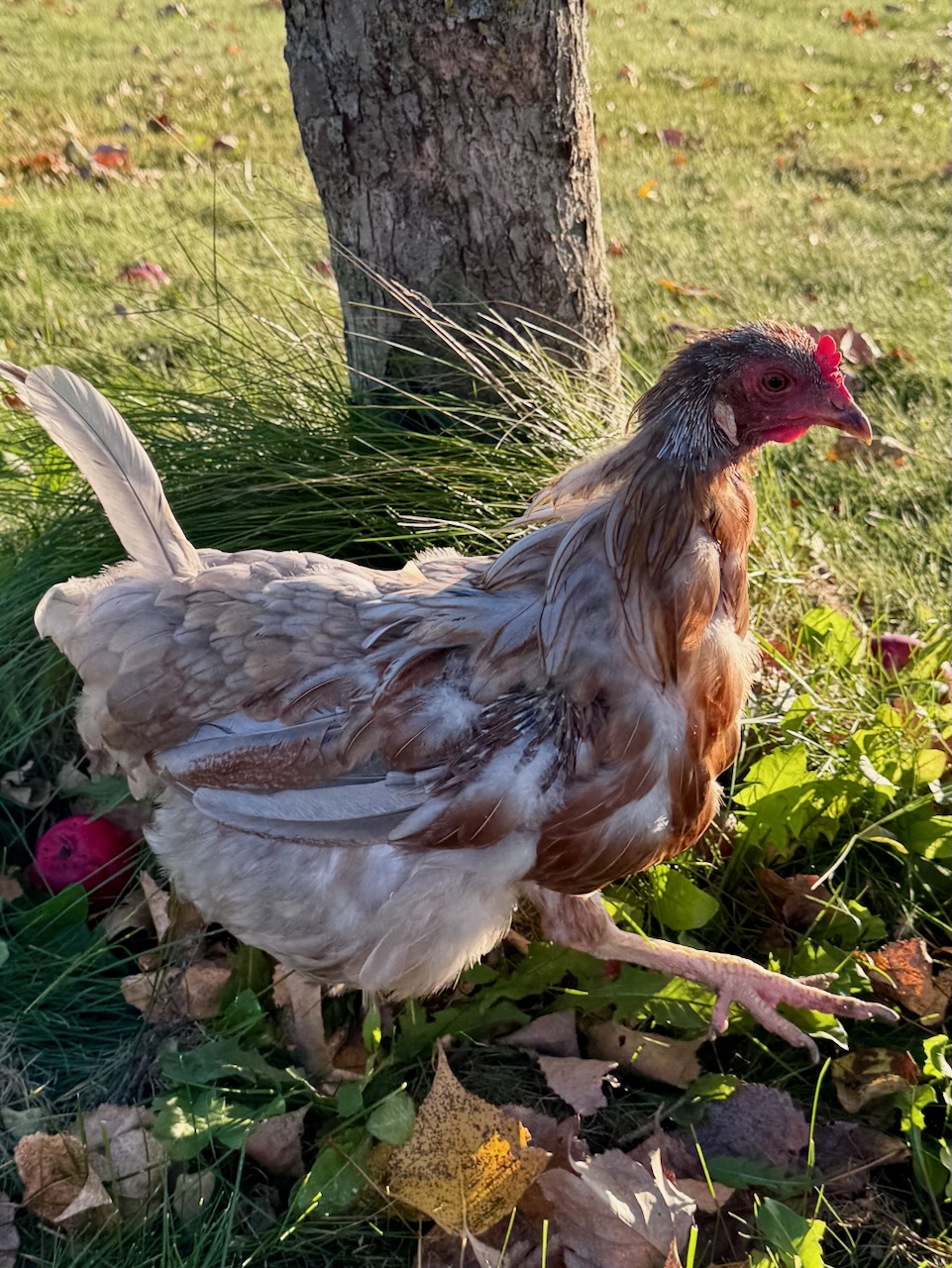
The first time you experience chicken molting, it can be a little alarming. One day your hen looks perfectly normal. The next, there are feathers everywhere, egg production has dropped, and one of your chickens looks like she's been through something.
After raising chickens through several molts, I've learned that there's a lot more happening during this time than simply losing old feathers. Molting is a natural physiological process that allows chickens to replace worn plumage with a fresh set of feathers, and it's closely connected with seasonal changes in daylight and reproduction.
Here's what's actually happening during a molt, what you might notice in your flock, and how I support my chickens while they work on growing an entirely new coat of feathers.
What Is Chicken Molting?
Molting is the natural process of shedding old feathers and replacing them with new ones. Adult chickens typically go through a major molt periodically, often as daylight hours shorten in the fall. The number of hours of light in a day plays an important role in both reproduction and seasonal molting. That's also why molting and a decline in egg production so often arrive together. Molting isn't simply a cosmetic feather change. It's part of a larger seasonal shift occurring throughout the hen's body.
Why Do Chickens Molt in the Fall?
For the longest time, I understood what molting was without really thinking about why it happens when it does. Then it clicked. They're replacing their worn-out feathers just in time for winter.
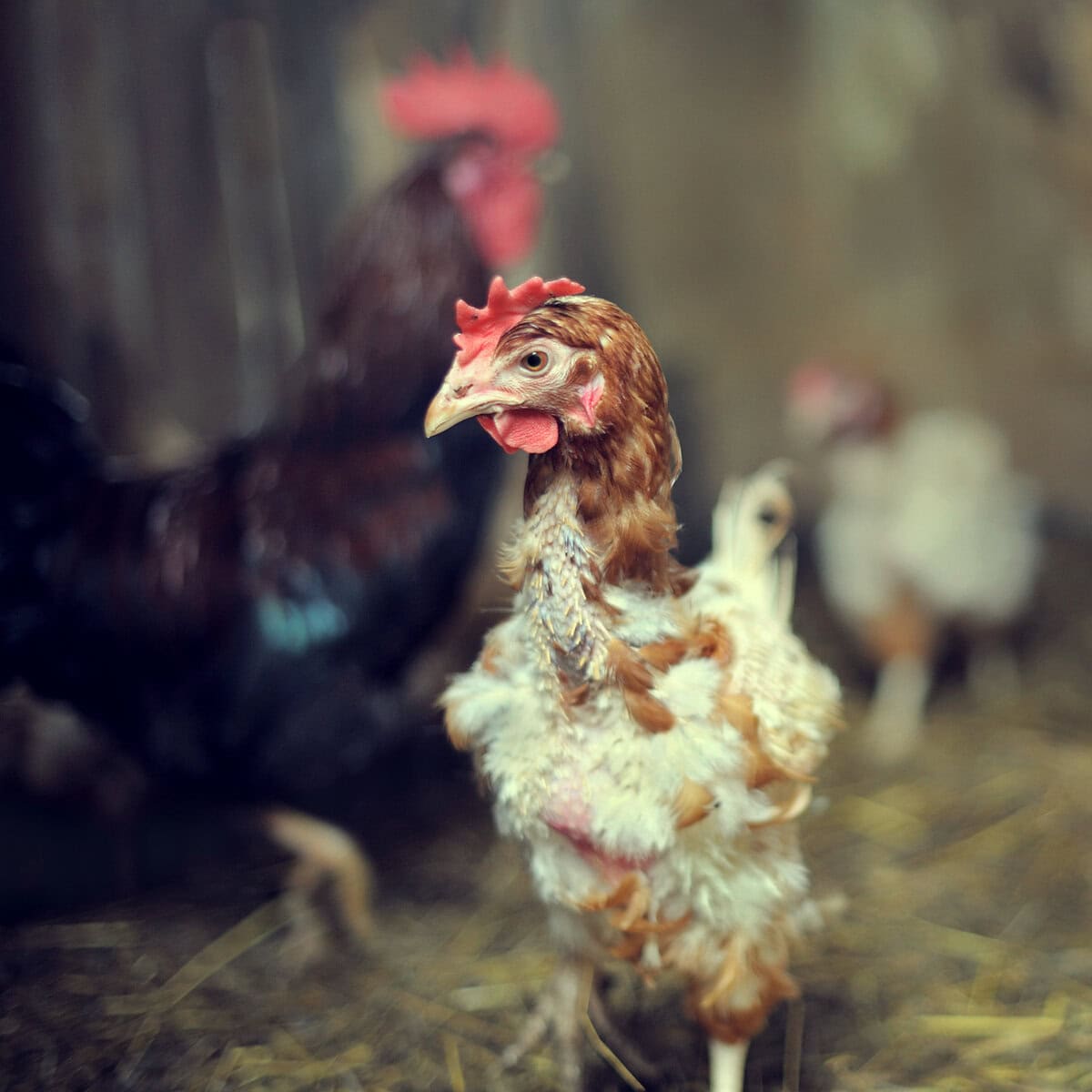
Throughout the year, feathers take a beating. They're exposed to sun, dirt, dust bathing, preening, weather and everyday chicken life. Over time, feathers become worn and damaged, and a fully grown feather can't simply repair itself. So chickens periodically shed those old feathers and grow new ones. And for many chickens, that major molt happens in late summer or fall as daylight hours begin to shorten, which means they head into colder weather with a fresh set of plumage.
Think about your own winter coat. If you'd worn the same coat every day for a year and it was faded, frayed, broken down and missing pieces, it probably wouldn't protect you from a harsh winter nearly as well as a brand-new one. Their feathers are their winter coat.
Fresh, intact plumage is important because feathers don't just cover a chicken's body. The structure of their plumage allows chickens to trap layers of air close to the body, providing insulation from the colder air around them. Suddenly, seeing your run covered in feathers every fall makes a whole lot more sense. They're not just losing feathers. They're preparing their next coat.
💡 THE LIGHT-BULB MOMENT
Chickens often molt as daylight decreases in late summer and fall, replacing worn plumage with fresh feathers before winter. Those new feathers aren't just prettier. Healthy, intact plumage helps chickens trap insulating air around their bodies and provides protection from the elements. Molting is essentially nature's way of replacing an old, worn-out winter coat with a new one.
What's Happening Inside a Chicken During Molt?
This is the part I wish more chicken keepers knew because molting is more than just a chicken losing all their feathers.
She's growing an entirely new set of feathers.
Feathers are made primarily from keratin, a structural protein. Research estimates feathers are approximately 88–90% protein, and their production relies heavily on amino acids, particularly the sulfur-containing amino acids methionine and cysteine. So when you see all of those pin feathers appearing, there's a whole lot of protein synthesis happening underneath them.
Her reproductive activity may slow down.
Shortening daylight affects the reproductive system of chickens. During the natural seasonal molt, egg production commonly decreases significantly or stops altogether while reproductive activity is reduced. That's why I don't worry when my otherwise healthy molting hens temporarily stop laying. Their bodies have other things going on.
Her hormones are changing too.
Molting and reproduction are influenced by a complex interaction between the amount of sunlight and hormones. This is one reason I don't think of molt as simply "feathers falling out." It's a seasonal physiological transition involving feather replacement, reproduction, hormones and nutrition all at once.
What Does a Molting Chicken Look Like?
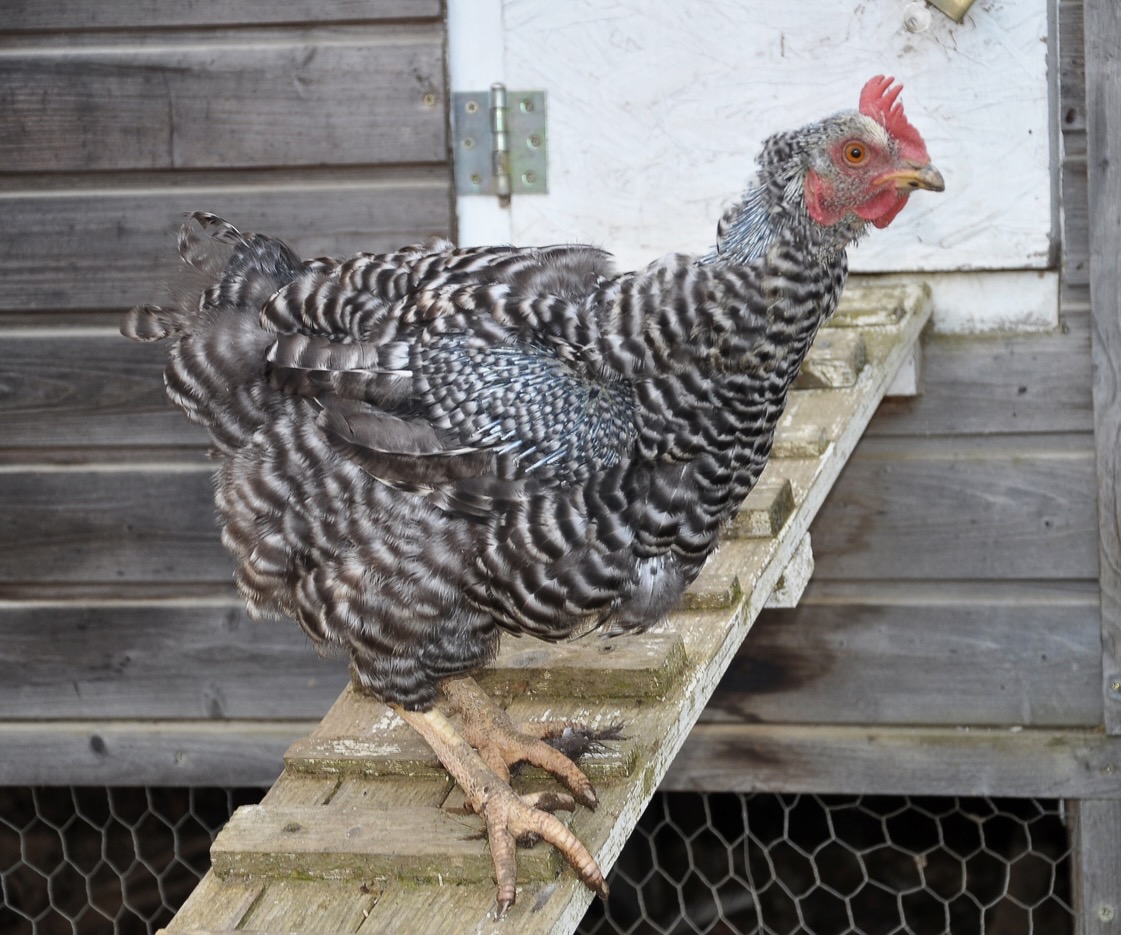
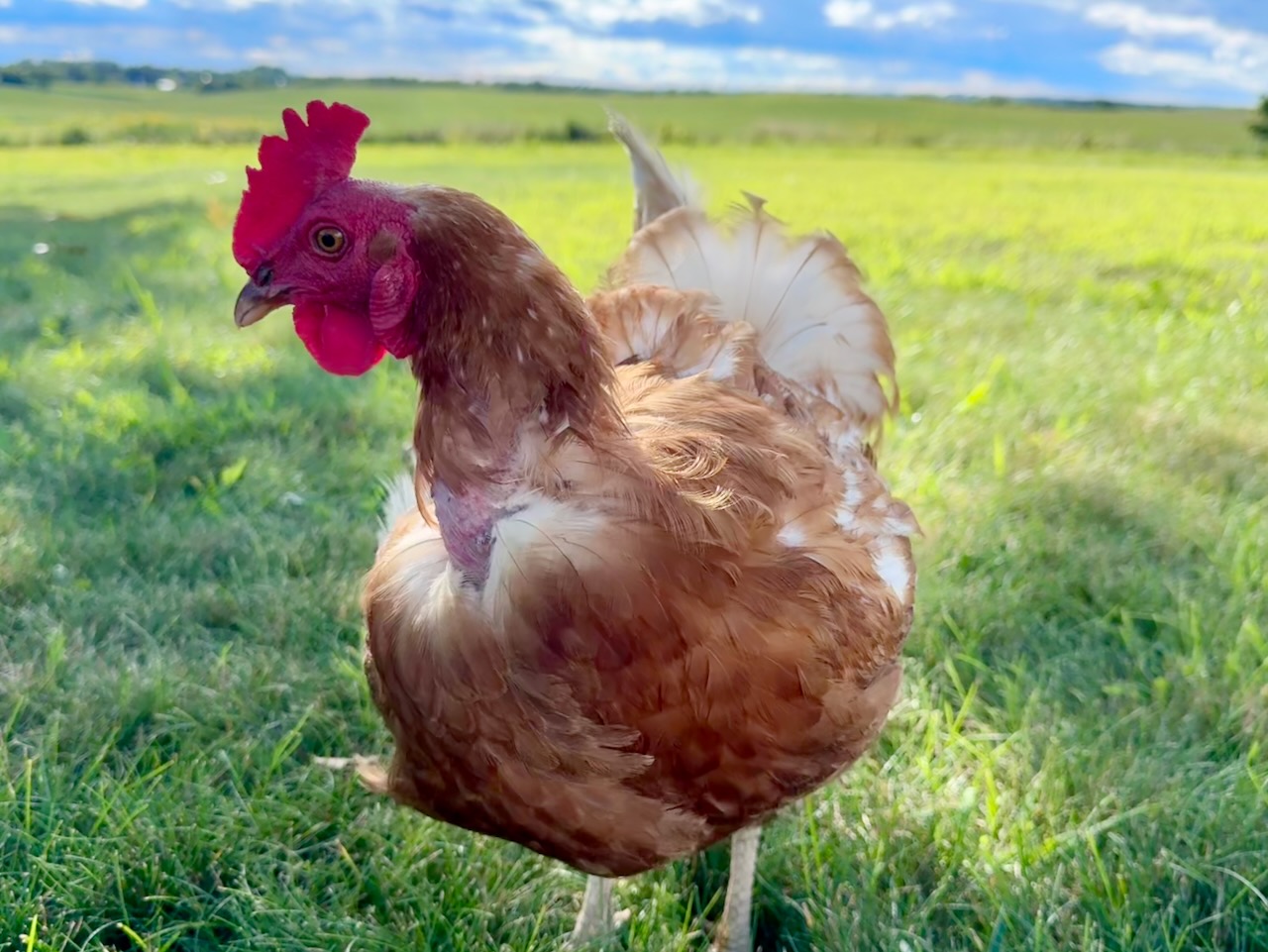
Not every chicken molts the same way. Some of mine seem to quietly replace a few feathers at a time. Others look like they exploded. This is sometimes described as a soft molt versus a hard molt. During a gradual molt, feather loss may be subtle and replacement can take longer. During a more dramatic molt, a chicken may lose a large number of feathers relatively quickly and look downright rough for a while.
You may notice:
- Loose feathers covering the coop and run
- Bare or thin-looking areas of plumage
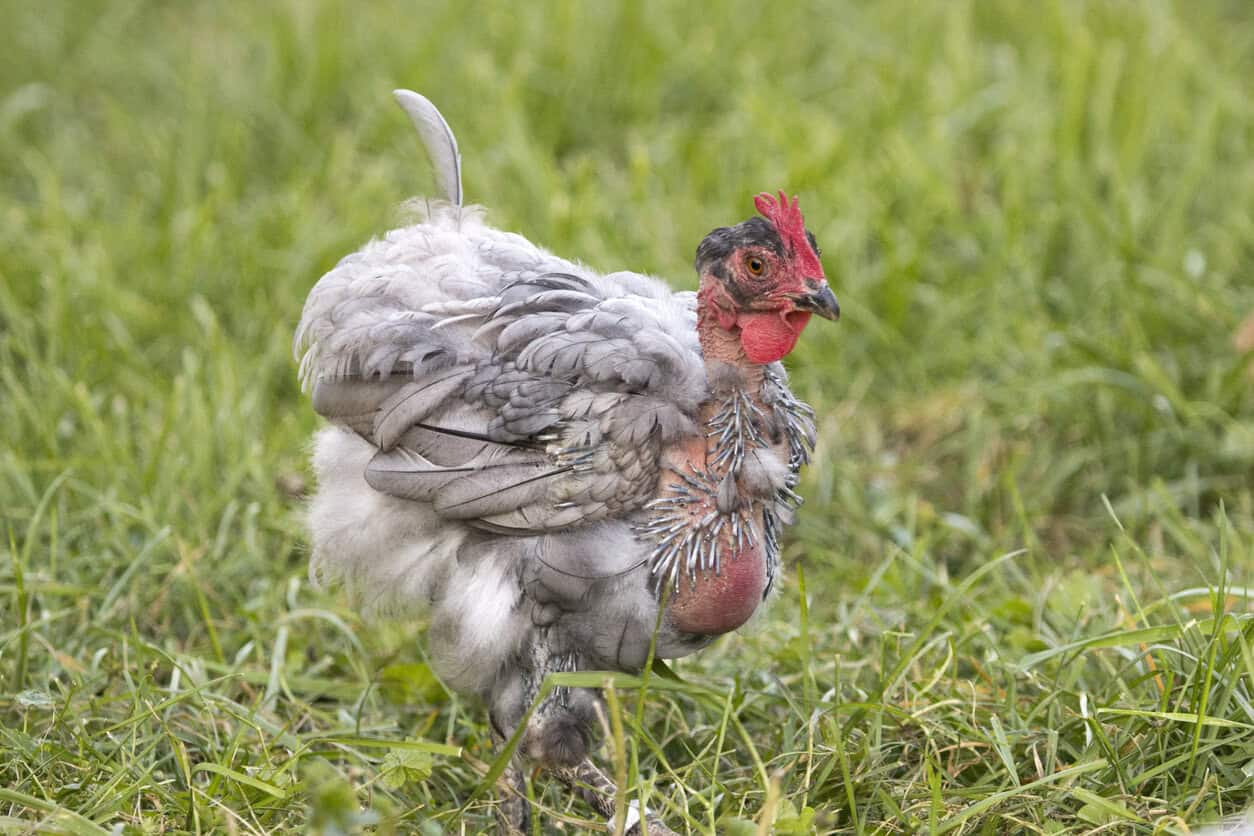
- New pin feathers coming through the skin
- Reduced or stopped egg production
- A chicken acting a little quieter than usual
- Less interest in being handled
- A generally ragged appearance
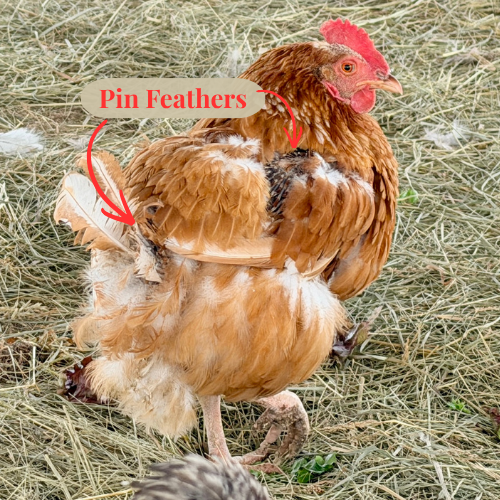
New feathers begin growing soon after old feathers are shed, so you may see clusters of little porcupine-looking pin feathers.
Those Pin Feathers Are Sensitive
One of the biggest things I change during molt is how much I handle my chickens. New feathers initially grow inside a protective sheath and have an active blood supply while developing. Those emerging pin feathers can be sensitive. If one of my chickens is covered in pins, I don't unnecessarily pick her up, pet her back, or mess with those feathers in any way. I let her be a tiny disgruntled porcupine until she's ready for affection again.
How Long Does Chicken Molting Last?
There's no exact timeline that applies to every chicken. Some chickens replace their feathers relatively quickly, while others go through a much slower molt lasting several months. Breed, age, individual bird, environment, nutrition and the amount of sunlight can all influence what you see.
And if you have a chicken like my Big Ticket, apparently the calendar is merely a suggestion. She usually decides that the middle of a Wisconsin winter is an excellent time to start dropping feathers. Every single year. The stress she puts me through each winter!
How I Support My Chickens During Molt
You don't need a cabinet full of special "molting remedies." Most of what I do is actually pretty simple.
1. Keep a balanced, complete feed as the foundation.
This is my biggest one. Growing feathers requires protein and amino acids, but that doesn't mean I start replacing my chickens' normal diet with tuna, scrambled eggs and mealworms. A nutritionally complete poultry feed provides protein along with the vitamins, minerals and amino acids chickens need.
Too many treats and supplements can actually dilute the nutrition they're receiving from that balanced feed. So during molt, I pay even more attention to making sure their regular feed remains the bulk of their diet.
2. Be thoughtful about extra protein.
You've probably heard the advice to "give chickens extra protein during molt." There's some truth hiding inside that advice, but protein percentage isn't the whole story. Feather keratin is particularly rich in sulfur-containing amino acids, especially cysteine, with methionine also playing an important role because chickens can use it to synthesize cysteine. That's why I'm more interested in the nutritional quality and amino-acid balance of their diet than simply chasing the highest protein percentage I can find.
I will offer small amounts of protein-rich foods during molt, but I still treat them as extras rather than replacements for a complete feed. What I typically offer my molting flock: scrambled eggs, plain tuna, mealworms, black oil sunflower seeds, and my homemade flock block. You can find that recipe here.
3. Reduce unnecessary stress.
Molting chickens already have plenty going on. This isn't when I'm rearranging the entire flock hierarchy, making unnecessary housing changes or repeatedly handling a chicken covered in pin feathers. I keep their environment as predictable and comfortable as possible and pay closer attention to how everyone is behaving.
4. Keep the basics solid.
Fresh water, a clean, dry environment, a nutritionally balanced diet, adequate space, and protection from predators and extreme weather. They're not glamorous recommendations, but good basics matter.
5. Give them access to a good dust bath.
Dust bathing is part of normal chicken grooming behavior and helps chickens maintain their plumage by working material through the feathers and removing excess feather lipids. I like to refresh my chickens' dust bath during molt so they have a good place to perform those natural grooming behaviors. And yes, mine will somehow manage to throw half of it out of their dust bath area within approximately eleven minutes.
You can read my article here on what makes a good dust bath.
What I Don't Do During Molt
I don't put sweaters on my chickens.
I know. They're adorable. But clothing can rub against sensitive pin feathers and interfere with normal feather positioning and insulation. Unless there's a veterinary reason for a protective garment, my molting chickens stay sweater-free.
I don't try to force egg production.
A temporary decrease in laying during a natural molt is normal. I allow my hens to follow that seasonal cycle rather than trying to push production through it by adding extra light in their coop.
I don't overwhelm them with treats and supplements.
More isn't automatically better. A handful of mealworms, sunflower seeds, eggs, tuna and every supplement in the chicken aisle doesn't necessarily create a better molting diet. Those extras can begin replacing the balanced feed that was formulated to provide the nutrients chickens actually need.
When Feather Loss Might NOT Be Molting
This one is important. Not every bald chicken is molting.
Take a closer look if feather loss is accompanied by things like:
- Red, irritated or damaged skin
- Scabs or open wounds
- Excessive scratching or irritation
- Visible mites, lice or egg clusters around feather shafts
- Other chickens pulling feathers
- Feather loss concentrated on the back or neck where a rooster is mating
- Poor body condition
- Changes in eating, drinking or behavior
- Feather loss that otherwise doesn't fit your flock's normal molting pattern
External parasites such as northern fowl mites and poultry lice can affect feathers and skin. Feather pecking can also cause significant feather loss, and nutritional problems can contribute to poor feather condition. When something doesn't look right, don't automatically chalk it up to "just molt." Look at the whole chicken.
A Molting Chicken Can Look Rough and Still Be Perfectly Normal
Molting isn't exactly your flock's most photogenic season. There will be feathers. There will be questionable hairstyles. There may be chickens who look like they've made several poor life decisions. But underneath all that chaos, their bodies are doing something pretty remarkable: replacing worn plumage with a brand-new set of feathers.
My job isn't to rush that process. It's simply to give them good nutrition, clean water, a comfortable environment, plenty of opportunities for normal chicken behavior, and a little extra space while they grow their new feathers. Then I wait for the glow-up.
Sources & Further Reading
Mishra R, et al. (2022). Practices and issues of moulting programs for laying hens: a review. British Poultry Science.
Sharp PJ. (1993). Photoperiodic control of reproduction in the domestic hen. Poultry Science.
Yu M, et al. (2020). Molecular Signaling and Nutritional Regulation in the Context of Poultry Feather Growth and Regeneration.
Oregon State University Extension. Why Did My Chickens Stop Laying?
Merck Veterinary Manual. Laying and Reproduction in Backyard Poultry.
Merck Veterinary Manual. Management of Backyard Poultry.
Merck Veterinary Manual. Mites of Poultry.
Merck Veterinary Manual. Physical Examination of Backyard Poultry.
A Note About Molting Research
Much of the scientific literature on molting in laying hens studies commercially induced molt, which may involve changes in feed, nutrition or lighting. That's not the same thing as the natural seasonal molt most backyard chicken keepers see.
Where possible, I've relied on research describing natural molt, feather physiology, sunlight hours, poultry nutrition and backyard-flock management. When induced-molt research helps explain a specific biological process, I've treated those findings cautiously rather than assuming they apply directly to every naturally molting backyard hen.