
Homemade Flock Block
If you’ve ever watched chickens spend an afternoon scratching through leaves, digging through dirt, and investigating every tiny speck on the ground, you already know one thing: chickens like to stay busy. Pecking, scratching, exploring, and foraging are all part of being a chicken. But there are times when our flocks have fewer opportunities to do those things.
Here in Wisconsin, winter can mean snow-covered ground, frozen dirt, and a whole lot more time spent in the coop and run. Bad weather, predator concerns, or periods when chickens need to remain confined can also limit their normal foraging opportunities. That’s when I like to give my flock something different to investigate. And one of their longtime favorites is a homemade flock block.
Jump to Recipe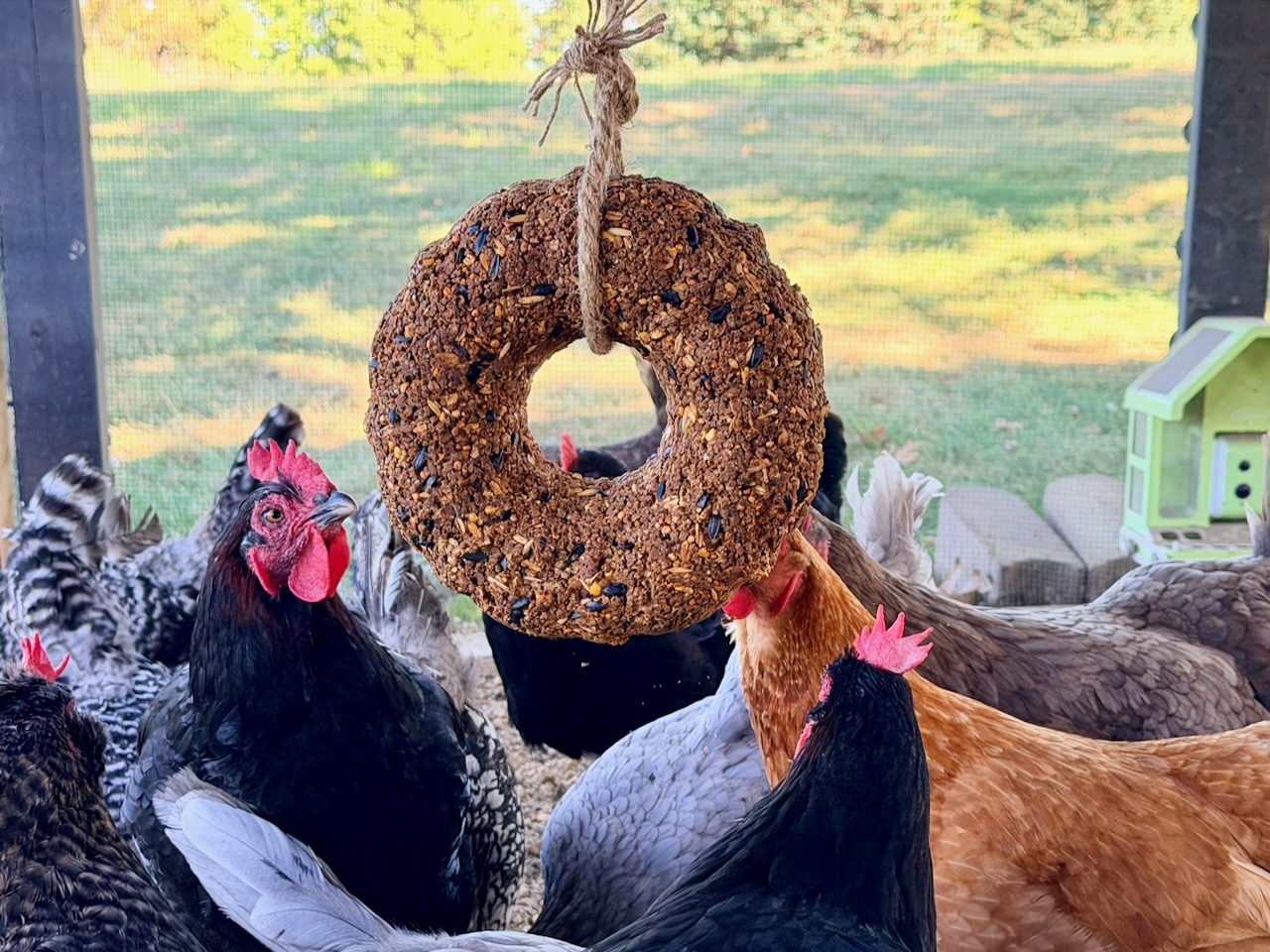
What Is a Flock Block?
Flock block is essentially a firm, edible block made with a mixture of chicken feed, grains, seeds, and other chicken-safe ingredients. Instead of scattering those ingredients on the ground where they can gobble them up quickly, baking them into a hard block makes the chickens work at it. They can peck at the surface, pick individual pieces loose, investigate different ingredients, and gradually break the block apart. That’s why I think of flock blocks less as a chicken “snack” and more as edible enrichment.
Chickens naturally spend time pecking, scratching, exploring, and searching for food and research into poultry enrichment has found that chickens readily interact with pecking blocks and other materials that give them something appropriate to peck and investigate.
That doesn't mean your chickens need a flock block, and it certainly isn't a magic fix for boredom or feather pecking. It's simply another way to give them an opportunity to use some of those natural behaviors. Research on enrichment and feather pecking is promising overall, but it seems the results vary depending on the birds, environment, and type of enrichment provided.
When I Use Flock Blocks
Winter is my favorite time to make them. My flock has always refused to walk on the snow, so when snow and frozen ground limit some of my flock's normal foraging opportunities, a flock block gives them something new to investigate.
I also like them for times when predator activity means more time in the run, or anytime I simply want to add something different to their environment. Lately we've had a fox problem, so I haven't been able to let them free range as much as they're used to. And because the block is baked until firm, they have to actually work at it instead of inhaling a handful of treats and immediately looking at me like they've never been fed before. You know the look.
A Flock Block Is Still a Treat
This is one distinction I want to make very clear. A homemade flock block is enrichment, not a nutritionally complete meal.
A complete chicken feed is formulated to provide chickens with an appropriate balance of protein, energy, vitamins, and minerals. Once we start adding significant amounts of grains, seeds, mealworms, and other extras, we're diluting that nutritional balance. That's why my chickens' regular complete feed remains available when I offer a flock block.
I also reformulated my original flock block recipe to use complete chicken feed as the largest ingredient rather than making the block primarily from treats. That doesn't turn it into complete feed again, but it means we're not building an enormous chicken cookie entirely out of scratch grains, seeds, and mealworms.
Think of it as a fun addition to their normal diet, not a replacement for it.
Why I Changed My Original Flock Block Recipe
I've been making homemade flock blocks for years, and my original recipe on City Life to Farm Life actually became one of my most popular posts. But I've learned a lot since I first wrote it.
My original recipe included ingredients like cayenne pepper, red pepper flakes, cinnamon, coconut oil, eggshells, and oyster shell. I also repeated some of the common claims I'd heard about those ingredients, including benefits for immunity, warmth, parasite control, and other areas of chicken health. These days, I've started to question those kinds of claims a lot more.
So when I rebuilt this recipe for HenFolk™, I asked myself a very simple question: What am I actually trying to accomplish with this flock block? I'm not trying to deworm my chickens. I'm not trying to "boost" their immune systems. I'm trying to give them something interesting to peck at and work apart. Then suddenly, the recipe got much simpler.
Complete chicken feed became the base, with smaller amounts of grains, seeds, mealworms, and other flock favorites mixed throughout. I also removed the added eggshell and oyster shell because I'd rather offer supplemental calcium separately than bake it into a treat every bird may eat.
And the spices? They just weren't necessary. Sometimes we chicken keepers have a habit of giving every ingredient a job description. A sunflower seed is allowed to just be a sunflower seed.
Ready to Make One?
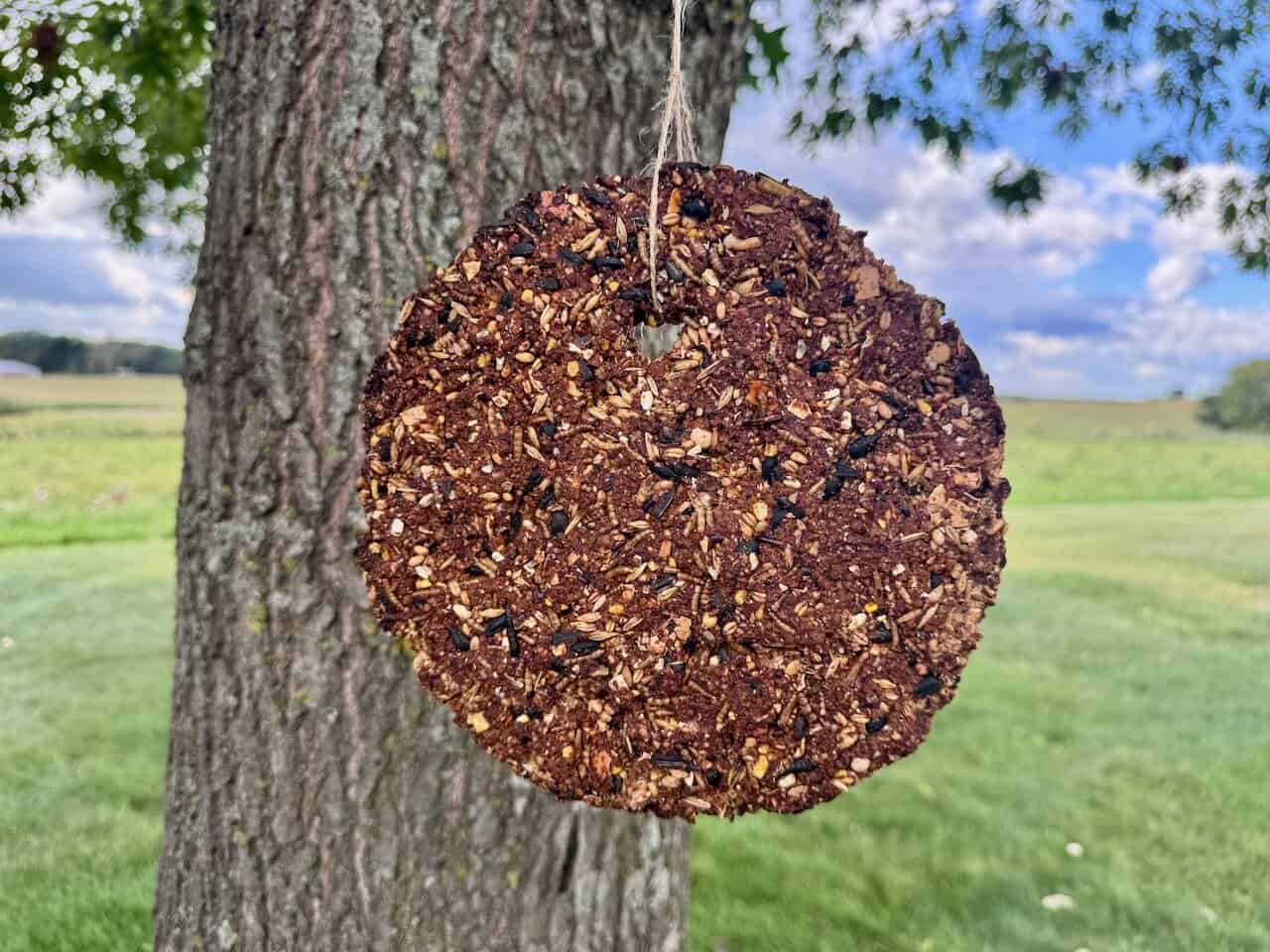
The goal is a flock block that's firm enough that your chickens have to work at it rather than one that crumbles apart the second you hang it up. Pack the mixture tightly, bake it until firm, let it cool completely, and then hand it over to your demolition crew.
Your chickens won't care if it looks perfect. They'll be too busy destroying it.

DIY FLOCK BLOCK
Ingredients
Equipment
Method
- Preheat Oven to 350°F.
- Lightly grease your baking pan.
- Combine the dry ingredients.
- In a large bowl, mix the chicken feed, scratch grains, sunflower seeds, rolled oats, mealworms, and ground flaxseed until evenly distributed.
- Mix the wet ingredients.
- In a separate bowl, whisk together the eggs, applesauce, molasses, and oil.
- Combine wet and dry ingredients.
- Pour the wet mixture into the dry ingredients and stir thoroughly. The mixture should be moist enough to hold together when squeezed in your hand, but not wet or soupy.
- Add water if needed.
- If the mixture is too dry and crumbly, add water 1 tablespoon at a time until it holds together when firmly squeezed.
- Pack firmly into the pan.
- Press the mixture tightly into the prepared pan, making sure to compress it well. This will help the finished flock block hold together.
- Bake for 30-40 minutes.
- The block should feel firm and the surface should look dry.
- Cool completely.
- Allow the flock block to cool completely before removing it from the pan. It should firm up further as it cools.
- Serve as enrichment.
- Place the cooled flock block where your chickens can peck and work at it. Keep their regular complete feed and fresh water available.
Notes
- This is a treat, not a meal. Flock blocks are intended for occasional enrichment. Keep your flock’s complete feed and fresh water available at all times.
- Choose feed for your flock. Use the same complete feed you normally provide so the recipe works for different flock ages and types.
- Skip added calcium. If your laying hens need supplemental calcium, offer oyster shell separately so they can consume it as needed.
- Customize the extras. You can swap the scratch grains, seeds, or mealworms for other chicken-safe favorites, but keep the complete feed as the main ingredient.
- Let it cool completely. The block will continue to firm as it cools, so don't judge the final texture straight out of the oven.
- Keep it dry. Because this is homemade and contains eggs and applesauce, I wouldn't leave a partially eaten block sitting somewhere damp where it can spoil or mold. Discard it if it becomes wet, moldy, or otherwise spoiled.
Research & Further Reading
For anyone who wants to dig a little deeper into the science behind pecking blocks, enrichment, and foraging behavior:
Do Hens Use Enrichments Provided in Free-Range Systems?
Researchers observed eight commercial free-range flocks and found that hens consistently interacted with pecking blocks and lucerne bales, although effects on feather condition were inconsistent.
Read the study
Effects of Stocking Rate and Environmental Enrichment on Pecking Behavior
Young pullets made intensive use of pecking blocks and pecking stones when they were provided as enrichment.
Read the study
Environmental Enrichment and Feather Pecking: A Meta-Analysis
Across multiple studies, enrichment was associated with lower feather-pecking frequency and less feather damage overall, although the authors emphasize that enrichment is only one part of managing feather pecking.
Read the study
One thought on “DIY Flock Block for Chickens: An Easy Pecking & Foraging Enrichment Treat”